I Want to Sell My House in STL—Where Do I Even Start?
Jun 11, 2026
Written by David Dodge
You've made the big decision. Now you're standing in your living room—boxes half-packed in your head, a list of repairs buried somewhere on your phone—and you're not sure where to begin.
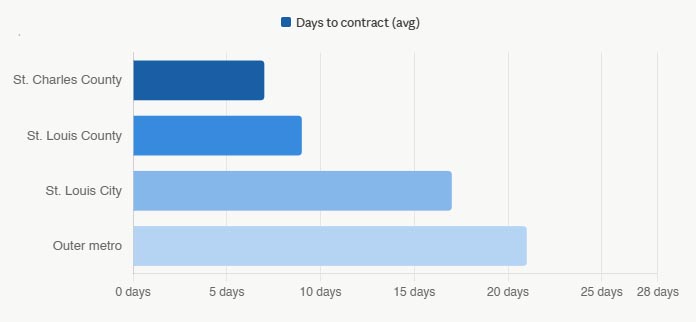
That feeling is completely normal. The St. Louis market moves quickly, especially in competitive areas like St. Charles County and St. Louis County, where move-in-ready homes can go under contract in less than 10 days.
If you don't have a plan, the market won't wait for you. The good news? Every successful move starts the same way: with a clear first step. Here's your starting line.
The St. Louis market reality in 2026
Before we get into the roadmap, it helps to understand what you're walking into. St. Louis in spring 2026 is not the frenzied bidding-war market of 2021, but it's not soft either. It's fast, it's neighborhood-specific, and if you're selling a turnkey home in the right zip code, you still hold real leverage.
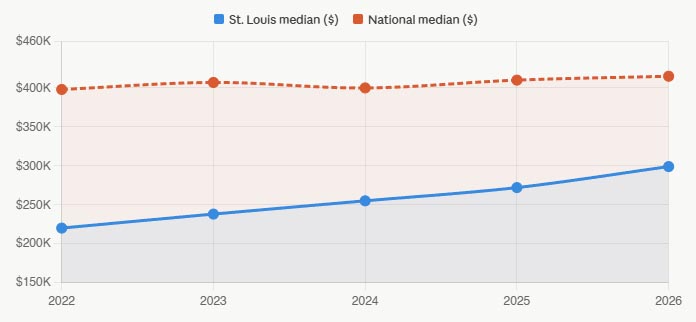
According to Homes.com's March 2026 market report, single-family homes in the St. Louis area averaged $299,450 — a 9.9% jump year-over-year. The city ranked third nationally in year-over-year price growth, trailing only Kansas City and San Francisco. That's not a typo. That's the market you're selling into.
emetropolitan.com's 2026 STL market analysis breaks it down even further: St. Charles County sees homes go under contract in roughly 7 days, St. Louis County in about 9. Meanwhile, St. Louis City sits at a 3.5-month supply — buyers there have more leverage, and sellers need to price more sharply. Understanding which market you're in is the first thing any serious seller needs to know.
The broader affordability picture is also worth mentioning. Regional housing costs sit approximately 21.2% below the national average, which means you're attracting a real pool of buyers — including equity migrants relocating from Chicago, Denver, and the coasts who can often bid over asking at the $300K–$600K tier.
St. Louis median home sale price vs. national average — 2022 through 2026
Single-family homes. Source: Homes.com, emetropolitan.com, Norada Real Estate
Your week-by-week selling roadmap
1. Decide your priority — speed vs. maximum profit (Week 1)
This is the single most important decision you'll make, and most sellers skip it entirely. Your answer shapes every other choice — which agent to hire, whether to renovate, whether to list at all.
If your home is turnkey — updated kitchen, newer HVAC, clean basement — a traditional listing on the MARIS MLS is almost certainly going to net you more money. Buyers in St. Charles County are competitive and will pay for move-in-ready. If your home has a leaky basement (a classic St. Louis issue), outdated electrical, or deferred maintenance that would surface on inspection, the calculus shifts. You'd either need to spend money fixing it or accept a lower price and longer time on market. That's exactly when an as-is cash offer from a direct buyer becomes worth running the numbers on.
Neither path is objectively better. They're suited to different properties and different personal situations. If you need to be out in 30 days, the answer is different than if you have 90. Be honest with yourself about both your timeline and your home's condition before you make a single phone call.
2. Pull your paperwork together (Week 1)
Before you talk to anyone — an agent, a cash buyer, a title company — you need to know your numbers. Specifically: your current mortgage payoff balance and any liens on the property. Call your lender directly for an exact payoff quote (the number on your monthly statement is not your payoff balance).
You'll also want to locate any past boundary surveys, HOA governing documents, and your most recent property tax statement. In St. Louis County and the City of St. Louis, you can pull your property tax status and assessment history through the respective county assessor portals. Knowing these numbers cold — before you sit across from any agent or buyer — puts you in control of the negotiation from the start.
3. Get ahead of the municipal occupancy inspection (Week 2)
This is the step that catches the most St. Louis sellers completely off guard — especially if they've bought and sold in other states. Most of the country doesn't have anything like this. St. Louis does.
According to the City of St. Louis's official occupancy permit page, 100% of residential property in the City of St. Louis sits in a Housing Conservation District, and Ordinance No. 71835 requires a Housing Conservation District Inspection before title can be transferred. This isn't optional — it's a legal requirement that must be cleared before you can close. Miss it, and your closing gets delayed.
And it's not just the City. STL Real Estate Search's municipal inspection directory details requirements for dozens of municipalities across the region — University City, Florissant, Ballwin, Bellefontaine Neighbors, and many others all have their own version. Some require inspections only at the time of sale; others apply to rentals as well. Requirements and fees change frequently.
The smart move: identify your specific municipality, call their code enforcement office directly, and schedule the inspection the moment you decide you're selling. These offices aren't always speedy. Getting in the queue early prevents it from becoming a closing bottleneck. If issues are flagged — and in older St. Louis homes, something usually is — you'll have time to address them without scrambling.
If a buyer is using FHA or VA financing, additional lender-required inspections can uncover deferred maintenance that may lead to repair requests later in the transaction.
Smart move: Address potential issues before listing whenever possible. Proactive repairs typically cost less, reduce surprises during escrow, and give you stronger negotiating leverage with buyers.
4. Choose your selling route (Week 2–3)
By week three, you should have enough information to make a real decision about how you want to sell. There are three main paths, each with genuine tradeoffs. Don't let anyone — an agent, a cash buyer, your brother-in-law — tell you one is obviously better without walking through your specific situation.
One thing worth noting: the "as-is cash offer" route has gotten significantly more competitive. With inventory still relatively low in many St. Louis suburbs, direct buyers are motivated — and some are quoting closer to market value than they were even 18 months ago. It never hurts to request an offer and compare it to a comparative market analysis from a traditional agent before you commit to either path.
Neighborhood-level considerations
St. Louis is genuinely hyper-local in a way that surprises people who've sold homes in larger, more homogeneous metro areas. A 10-minute drive can mean the difference between a bidding war and 45 days sitting on the market.
In Kirkwood, Webster Groves, and Chesterfield, demand has remained strong through 2026. These are established neighborhoods with strong school districts, and turnkey inventory moves quickly. If you're selling here, presentation matters — buyers in these markets are comparing your home against well-staged competition, and first impressions drive offers.
In St. Louis City proper — particularly in neighborhoods still recovering from long-term disinvestment — the dynamics are different. You have more inventory, buyers have more choices, and pricing aggressively from the start tends to outperform aspirational pricing followed by reductions. House Sold Easy's 2026 STL market analysis puts it bluntly: the era of throwing any home on the market at an aspirational price and waiting for a bidding war to bail you out is over in most parts of St. Louis City.
St. Charles County — O'Fallon, Wentzville, St. Peters — remains one of the hottest submarkets in the entire metro. New construction activity has picked up, but resale homes in established neighborhoods still attract strong buyer pools, particularly from young families priced out of St. Louis County.
Lower is faster. Source: emetropolitan.com April 2026 data.
The basement question: don't ignore it
If there's one thing that derails St. Louis home sales more than anything else, it's the basement. Water intrusion is endemic to the region's clay-heavy soil and aging drainage infrastructure. Buyers' inspectors know exactly what to look for — efflorescence on block walls, staining along the floor seam, musty odors — and they will find it.
The decision isn't always to fix it before listing. Waterproofing a basement can run anywhere from $4,000 for targeted crack injection to $20,000+ for a full perimeter drain tile system. Whether that investment makes sense depends on your price point, your market, and whether the issue is cosmetic or structural.
What you should absolutely do before listing: disclose what you know, honestly and in writing. Missouri requires seller disclosure on known material defects. Concealing a known water issue doesn't just risk the deal — it can create legal liability after closing. If you're uncertain about the severity of what you're seeing, a pre-listing inspection by an independent home inspector (not your agent's referral) is worth every dollar.
Getting to closing: what to expect on the timeline
Traditional listing to closing in St. Louis typically runs 45–60 days from the day you accept an offer — assuming no major surprises. Here's roughly how that breaks down:
Offer acceptance to inspection contingency resolution: 7–14 days. This is where deals fall apart most often. Buyers request repairs or credits; sellers either agree, counter, or let the deal die. Having your pre-listing inspection in hand gives you negotiating leverage here.
Mortgage underwriting: 21–30 days from accepted offer. Your buyer's lender is doing their own appraisal and verification. If the appraisal comes in low — a real risk in a market with rapid appreciation — you may need to renegotiate.
Municipal inspection clearance: Variable, but can add 1–3 weeks if you haven't started the process already. This is why getting ahead of it in Week 2 matters so much.
Title work and closing: 3–7 days. Title companies in St. Louis are experienced with the municipal inspection requirements — if you've done your homework, this part is usually smooth.
Cash sales move faster — 14–21 days is typical if both parties are motivated. The absence of mortgage underwriting and the simplified inspection process (no lender-required repairs) is the primary advantage for sellers.
One final thought before you make any calls
The most common mistake St. Louis sellers make isn't choosing the wrong agent or the wrong price. It's starting the process reactively — calling an agent after they've already mentally moved on, without knowing their payoff number, without having looked into their municipal requirements, without a sense of their real timeline.
The sellers who do best are the ones who spend a week doing exactly what this guide outlines before they take a single meeting. Know your numbers. Know your municipality's rules. Know what condition your home is actually in — not what you hope it's in. From there, every conversation you have will be sharper, and every decision will be easier.
The St. Louis market in 2026 still rewards prepared sellers. Go be one of them.
Ready to Buy or Sell in St. Louis? House Sold Easy Has You Covered!
Navigating St. Louis’ red-hot luxury market doesn’t have to be a headache. With House Sold Easy, it’s all about less hassle—we’ve got you covered from start to finish. Our St. Louis experts know every corner of this city and will make buying your dream home or selling your high-end property a breeze. Don’t miss out on the hottest market in the U.S.! Contact House Sold Easy today and let’s make your real estate goals happen!