Why Home Staging Is Crucial for St. Louis Sellers in 2025
Apr 10, 2026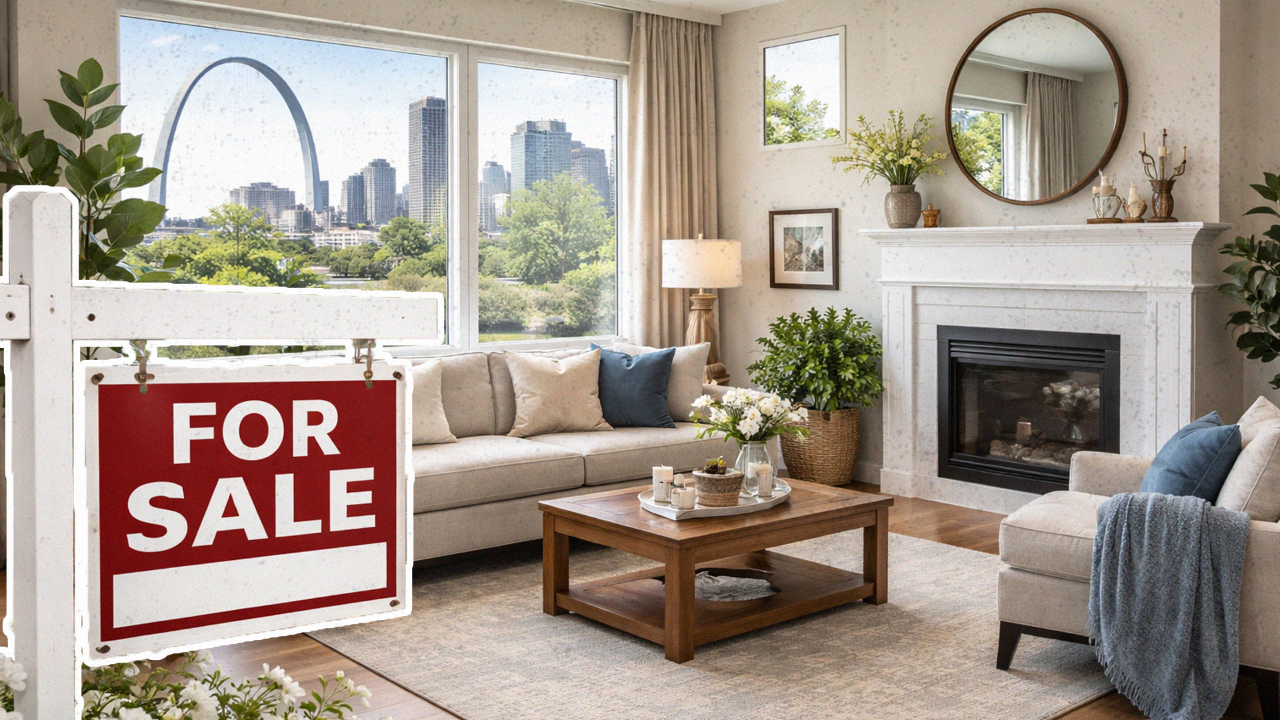
Written by David Dodge
In a market where buyers have more choices and patience than they did two years ago, the gap between a staged home and an unstaged one isn't just aesthetic — it's measured in days on market, price reductions, and final sale dollars.
49%
Some agents say staging reduces time on market
1–10%
Higher offers reported by 29% of agents
47 days
avg. DOM in St. Louis, up from 42 last year
$275K
St. Louis median home price, Jan 2026
The St. Louis Market in 2025–2026: More Inventory, More Competition
If you listed a home in St. Louis in 2021 or 2022, you probably remember getting three offers before the weekend was over. Buyers were waiving inspections, skipping appraisals, and sometimes paying six figures over asking. That era is behind us — and the data says so clearly.
By fall 2025, the St. Louis metro had more homes for sale than at any point since before the pandemic. Real estate observers noted that homes priced correctly and marketed well were still going under contract in about 24 days, but overpriced listings or those lacking visual appeal were lingering for months — some never selling at all.
The numbers back that up. Redfin data from early 2026 shows that the average St. Louis home now sells after 47 days on market — five days longer than the same period a year prior, with the average sale price landing around 3% below list price. In St. Louis County specifically, days on market climbed from 28 to 33 days year-over-year. These may sound like modest shifts, but in real estate psychology, a listing sitting for 60 or 70 days triggers immediate buyer skepticism: "What's wrong with it?"
⚠ Attention
Local St. Louis real estate experts are direct about what's happening: overpriced homes are sitting longer and frequently seeing price reductions, especially when they lack updated features or a strong visual presentation. Expired listings are increasing year-over-year across the metro.
The bottom line for St. Louis sellers is this: you still have pricing power in many neighborhoods, but you can no longer rely on low inventory alone to get top dollar. Presentation — and specifically professional staging — has moved from a nice-to-have to an essential part of any competitive listing strategy.
What the National Data Says About Staging's ROI
Every spring, the National Association of Realtors® publishes its Profile of Home Staging, surveying thousands of active real estate professionals across the country. The 2025 edition, released in May, is the most comprehensive to date — and the findings are hard to argue with.
According to the NAR's 2025 Profile of Home Staging, 83% of buyer's agents reported that staging made it easier for buyers to visualize a property as their future home — a fundamental psychological shift that drives faster decisions and stronger offers. Meanwhile, nearly 29% of agents said staging led to a 1% to 10% increase in offer prices compared to similar unstaged homes. On a $275,000 St. Louis home — roughly the current median — that translates to an additional $2,750 to $27,500 at closing.
The speed advantage is equally compelling. NAR found that 49% of sellers' agents observed staged homes spending less time on the market, with 30% noting a slight reduction and 19% reporting a significant one. In a St. Louis market where homes are already taking five-plus more days to sell than last year, shaving time off your listing isn't just convenient — it reduces the carrying costs of mortgage, taxes, and utilities that accumulate every week a home sits unsold.
Perhaps the most striking ROI figure comes from the staging industry itself. The Home Staging Institute cites industry data suggesting the return on investment for professional staging can exceed 550% when you factor in both the higher sale price and the time-value savings from a faster transaction. Even at more conservative estimates, investing 1% to 2% of a home's asking price in staging tends to yield returns of 5% to 15% over the unstaged comparable value.
The Overpricing Trap: Why Staging Is Your Insurance Policy
One of the quieter conversations happening in St. Louis real estate right now is about overpricing exposure — the real and measurable cost of listing a home too high without the visual backing to justify the price.
Here's how the trap works: a seller lists at an aspirational price. Buyers touring the home notice dated finishes, cluttered rooms, or a lack of cohesive style. The home sits. After two or three weeks, the listing grows "stale" in the MLS, and even buyers who haven't seen it start mentally discounting it. The seller reduces the price. By the time an offer comes in, the final sale price is often below what it would have been had the home been properly staged and correctly priced from day one.
⚠ Attention
NAR data shows that sellers who did not stage their homes faced price reductions five to twenty times greater than the original cost of staging. Choosing not to stage is rarely the money-saving decision it appears to be.
The St. Louis market makes this especially acute. Redkey Realty's 2025 market analysis confirms that while correctly priced homes are still moving steadily, overpriced listings tend to linger, and buyers are using the extra comparison time to negotiate more aggressively. Staging doesn't just make your home look better — it provides the visual justification for your price. It says to the buyer: "This is why it's worth $285,000, not $265,000."
Think of staging as buying insurance against the overpricing trap. It gives appraisers tangible evidence of value, it gives buyers emotional permission to stretch their budget, and it gives your listing the kind of first impression that translates online — where, according to NAR data, 40% of buyers are more willing to schedule a showing after seeing a staged home in listing photos.
Room-by-Room: Where St. Louis Buyers Are Actually Looking
Professional stagers don't attempt to transform every inch of a home — they focus resources strategically on the spaces that drive buyer decisions. NAR's research identifies a clear hierarchy of which rooms matter most to buyer agents and their clients.
The living room holds the top spot because it's where buyers form their primary emotional impression. In St. Louis homes — many of which feature the classic red-brick Craftsman or South City shotgun layout — the living room is often the first space you enter and the one that sets the tone for the entire showing. A well-staged living room communicates that the home has been cared for and helps buyers project their own life into the space.
Among sellers' agents, the most commonly staged rooms tell a similar story: NAR found that 91% stage the living room, 83% the primary bedroom, 69% the dining room, and 68% the kitchen.[1] For St. Louis sellers on a budget, prioritizing just these four rooms — rather than staging the entire home — delivers the highest concentration of buyer impact per dollar spent.
One area that's increasingly important in the St. Louis market is curb appeal, which technically precedes the interior staging conversation but is inseparable from it. In neighborhoods like Kirkwood, Webster Groves, Clayton, and Maplewood — where character-rich older homes sit on mature-treed lots — first impressions begin at the sidewalk. A freshly painted front door in a muted St. Louis classic like navy or forest green, a power-washed driveway, and seasonal plantings can add thousands in perceived value before a buyer ever walks inside.
St. Louis-Specific Staging Considerations
National staging advice doesn't always translate directly to the St. Louis market. Our city has its own architectural personality, buyer demographics, and neighborhood expectations. Here's what that means practically for sellers.
Embracing — not hiding — the character
St. Louis buyers, especially those shopping in the city proper and the inner-ring suburbs, are often specifically seeking character homes with original hardwood floors, vintage tile work, built-in bookshelves, and the kind of millwork you simply can't find in new construction. A common staging mistake is to modernize too aggressively and strip a home of the very details that justify its price in the first place. Good staging in St. Louis enhances original character — it doesn't erase it.
Basement staging matters more here
St. Louis homes almost universally have basements, and savvy buyers know it. Many are looking for finished or semi-finished lower levels that can serve as family rooms, home offices, or in-law suites. A staged basement — even a simple one with neutral furniture, good lighting, and de-cluttered storage — signals usable square footage. An unstaged, cluttered basement signals work and cost. In a market where median prices hover around $275,000, demonstrating that every square foot is livable can be a meaningful differentiator.
Seasonal timing in Missouri's climate
St. Louis summers are genuinely hot and humid — temperatures regularly push into the upper 90s with heat indexes above 100°F. Staging that emphasizes cool, breezy interiors (ceiling fans, light curtains, neutral palettes) photographs and shows better in the spring and early summer selling season. For fall listings, warm textures and transitional decor help buyers feel at home in a way that overly cool-toned modern staging doesn't. Working with the season, rather than against it, is a subtle but real staging advantage in the St. Louis climate.
Neighborhood-specific expectations
Ladue / Town & Country
Luxury buyers expect polished, fully staged interiors. Professional staging is table stakes in this price range.
Tower Grove / Shaw
Buyers are drawn to character. Staging should highlight original details — hardwood, plaster walls, vintage fixtures.
Chesterfield / Ballwin
Competitive suburban market. Clean, neutral, move-in-ready presentation closes deals in under 17 days.
Maplewood / Webster Groves
Younger buyers, often first-timers. Staging that shows livability and personality resonates strongly here.
What Professional Staging Actually Costs in St. Louis
Cost is the objection most sellers raise first. The honest answer is that professional staging costs vary based on home size, scope, and whether the home is occupied or vacant — but it's rarely as expensive as sellers fear, and it's almost always less expensive than a price reduction.
|
Service Level |
Typical Cost |
Best For |
|---|---|---|
|
Consultation only |
$150–$400 |
Occupied homes needing guidance on declutter and rearrangement |
|
Partial staging (key rooms) |
$800–$1,800 |
Occupied homes with some good bones but gaps in furniture/decor |
|
Full staging, occupied |
$1,500–$3,000 |
Homes where current furnishings would hurt more than help |
|
Vacant home staging |
$2,000–$5,000+/mo |
Empty homes where buyers struggle to visualize space |
|
Virtual staging (photos only) |
$75–$200/room |
Budget-conscious sellers; best for vacant listings |
The national average staging cost sits around $1,849, according to HomeAdvisor data cited by industry analysts. On a $275,000 St. Louis home, even a full staging investment of $2,500 represents less than 1% of the sale price. If staging elevates the final offer by even 3% — a conservative estimate given NAR's data — that's $8,250 in additional sale proceeds against a $2,500 investment. That's a return that most financial instruments would envy.
For vacant homes — which are increasingly common as relocating sellers leave St. Louis before closing — full-service staging is essentially non-negotiable. Buyers struggle to emotionally connect with empty rooms. They can't gauge scale, can't visualize how furniture fits, and tend to focus on every minor imperfection on the walls. Staged vacant homes routinely outperform their unstaged equivalents by a significant margin in both speed and final price.
10 Actionable Staging Tips for St. Louis Sellers
Remove family photos, kids' artwork, and personal collections — but keep enough warmth that the home feels lived-in and welcoming, not like a hotel room. St. Louis buyers want to imagine their family there, not yours.
Original hardwood floors are one of the most valued features in St. Louis homes. If yours are dull or scratched, a professional refinish ($2–$4/sq ft) often delivers more visual ROI than any furniture upgrade.
Neutral warm whites (not stark gray) photograph beautifully and read as clean and spacious. In St. Louis's mix of Craftsman and Colonial homes, warm off-whites like Sherwin-Williams Accessible Beige or Benjamin Moore White Dove complement period details without fighting them.
The majority of St. Louis buyers begin their search online. Staging that looks good on a 6-inch phone screen — well-lit, uncluttered, spatially coherent — is more important than staging that looks impressive only in person.
Don't ignore it. A basement cleared of storage, with basic lighting and a simple furniture arrangement, communicates usable square footage. A cluttered basement communicates hidden cost and deferred maintenance.
Many St. Louis city homes have smaller rooms than buyers expect from the exterior. Over-sized furniture makes rooms feel cramped. A professional stager knows how to use appropriately scaled pieces to make a 12x14 living room read as generous rather than tight.
New cabinet hardware, a fresh coat of paint on dated cabinetry, and new light fixtures can modernize a kitchen for under $1,000. You don't need to replace countertops or appliances to make a kitchen feel competitive.
Replace any dead bulbs immediately and standardize color temperature throughout — warm white (2700–3000K) throughout main living areas. Poor lighting is the silent deal-killer in listing photos and in-person showings alike.
Fresh white towels, a new shower curtain, cleared countertops, and a small plant create a spa-like feel that photographs beautifully. This is a $100 upgrade with disproportionate visual impact during showings.
Ladue and Clayton sellers in the $600K+ range should invest in full professional staging with rented furniture. Sellers in the $180K–$260K range in South City or St. Charles can often achieve strong results with a professional consultation and selective accessory upgrades.
The Buyer Psychology Factor: TV Shows and Raised Expectations
One underappreciated driver of staging's growing importance is the role of HGTV, Netflix real estate shows, and social media in reshaping what buyers expect to see when they walk through a door. This isn't speculation — NAR measured it directly.
The 2025 staging report found that nearly 48% of home buyers expect houses to look as polished as those featured on home improvement shows, and 58% reported disappointment when homes looked different than how they were portrayed on TV or online. For St. Louis sellers, this means buyers are arriving at showings with a mental benchmark already set — often by a perfectly staged Joanna Gaines renovation or a meticulously styled Instagram listing. If your home can't hold its own against that mental image, buyers walk away underwhelmed, regardless of the actual quality of the structure or the neighborhood.
✓ Professional staging levels the playing field between your home and the polished new construction or recently renovated competition on the MLS. It's not about creating an illusion — it's about presenting the actual value of your home in its best possible light, at the exact moment when buyers' standards are higher than ever.
This matters especially in St. Louis's most competitive micro-markets. Innago's Missouri market analysis notes that in Crestwood, Ballwin, and Green Park, the hottest homes sell for up to 7% above list price and go pending in as few as 4 to 7 days. That premium performance doesn't happen by accident — it's driven by sellers who understand that presentation and pricing strategy are two sides of the same coin. You cannot consistently achieve above-ask results without giving buyers a visual reason to pay above ask.
The Verdict: Staging as a Business Decision, Not a Luxury
For much of the last decade, professional staging felt like something reserved for high-end listings in Clayton or Ladue. That perception has shifted fundamentally. In a St. Louis market where days on market are creeping up, inventory is rising, and buyers are gaining back negotiating leverage they haven't had since before the pandemic, staging is now the operating baseline for any seller serious about maximizing their outcome.
Local St. Louis real estate data is unambiguous on this point: strong preparation, including staging, professional photos, and accurate pricing, will help sellers stand out and avoid sitting while buyers compare growing options. That's not marketing language — that's a direct consequence of supply and demand math. When buyers have more choices, they will choose the home that feels most move-in ready and most worth its price. Staging creates that feeling.
The math is simple. A $2,000 staging investment on a $275,000 home is less than 0.75% of the sale price. A 5-day reduction in time on market saves roughly $400–$600 in carrying costs alone. A 2% improvement in final offer price adds $5,500 to your proceeds. The total upside of professional staging, conservatively modeled, far exceeds its cost in every realistic scenario — and the downside of skipping it, in this market, is a listing that lingers and a price reduction that signals weakness.
The sellers winning in St. Louis right now are not just pricing well. They are presenting their homes as the obvious best choice among every comparable on the market. That starts with staging — and it ends with a faster sale at a better price.
Ready to Buy or Sell in St. Louis? House Sold Easy Has You Covered!
Navigating St. Louis’ red-hot luxury market doesn’t have to be a headache. With House Sold Easy, it’s all about less hassle—we’ve got you covered from start to finish. Our St. Louis experts know every corner of this city and will make buying your dream home or selling your high-end property a breeze. Don’t miss out on the hottest market in the U.S.! Contact House Sold Easy today and let’s make your real estate goals happen!