St. Louis Housing Market July 2026: Trends, Inventory & Prices
Jul 07, 2026
Written by David Dodge
The first week of July is a good time to take a fresh look at the St. Louis housing market. Things aren't moving as frantically as they were a couple of years ago, but they're far from slow. More homes are hitting the market, buyers finally have a little breathing room, and sellers have to be more strategic if they want top dollar.. After several years of intense seller dominance fueled by low inventory and ultra-competitive bidding, the first week of July has brought a broader look at changing dynamics. Inventory levels are rising modestly, prices remain relatively steady, and the lingering effects of sticky inflation continue to influence mortgage rates and buyer behavior. This isn't the dramatic cooling some predicted, nor is it a return to the frenzy of 2021-2023. Instead, it's a healthier rebalancing that offers new opportunities for both buyers and sellers who are prepared.
I've tracked the St. Louis real estate scene for years through direct conversations with local agents, reviews of MARIS data via St. Louis REALTORS® monthly reports, and cross-referencing with national sources. The story right now centers on what 4.5 months of national housing supply means on a local Missouri level, why sellers can no longer count on quick sales at premium prices, and how buyers are regaining tools like inspection contingencies while well-priced, move-in-ready homes continue to perform strongly. Here's what the latest numbers mean if you're planning to buy or sell in St. Louis this summer for anyone navigating this market today.
Understanding the National Picture and Its Local Ripple Effects in Missouri
Nationally, the housing market has seen inventory improve significantly. According to the National Association of Realtors (NAR), the months' supply of existing homes reached approximately 4.5 months as of May 2026. This metric—calculated by dividing active listings by the current sales pace—represents a notable step toward balance compared to the sub-3-month shortages that defined the post-pandemic peak. Homes are spending a median of around 32 days on the market in many reports, with median prices holding around $417,000-$429,000 nationally, showing modest year-over-year gains.
In Missouri, the picture aligns but with regional nuances. Statewide, months of supply hovers closer to 3 months in many analyses, still indicating a seller-leaning environment but with clear upward trends in listings. For the St. Louis metro area specifically, St. Louis REALTORS® data encompassing the City and County shows inventory for residential homes increasing by roughly 8-9% in recent months, with months of supply ranging from about 2.0-3.5 months depending on property type and location. Single-family homes often sit tighter around 2-2.5 months in prime suburbs, while townhouses and condos are seeing supplies edge higher toward 3+ months.
So what does that actually mean for St. Louis? It translates to more choices for buyers without overwhelming the market. Active listings in St. Louis County have climbed, providing options in neighborhoods that previously had almost nothing available. New listings are entering at a measured pace—down slightly in some spring reports but up year-over-year overall—reflecting homeowners gradually testing the waters. This increase isn't a flood; total supply remains below pre-pandemic levels in many desirable pockets, which helps explain why prices haven't softened dramatically.
One reason the market hasn't picked up more quickly is mortgage rates. Inflation has stayed stubborn enough that rates have remained in the mid-6% range for much of the year, making buyers more careful about what they can afford. As detailed in economic analyses like those from the Brookings Institution, shelter and services costs have remained elevated even as other inflation components cooled. This has kept the Federal Reserve cautious, maintaining mortgage rates in the mid-6% range for much of 2026. Higher borrowing costs mean buyers are more selective, which in turn pressures sellers to price realistically. In St. Louis, this dynamic is particularly evident in the move-up buyer segment, where families are weighing higher rates against the benefits of larger homes in good school districts.
Data Visualization: Months of Supply Trends in 2026
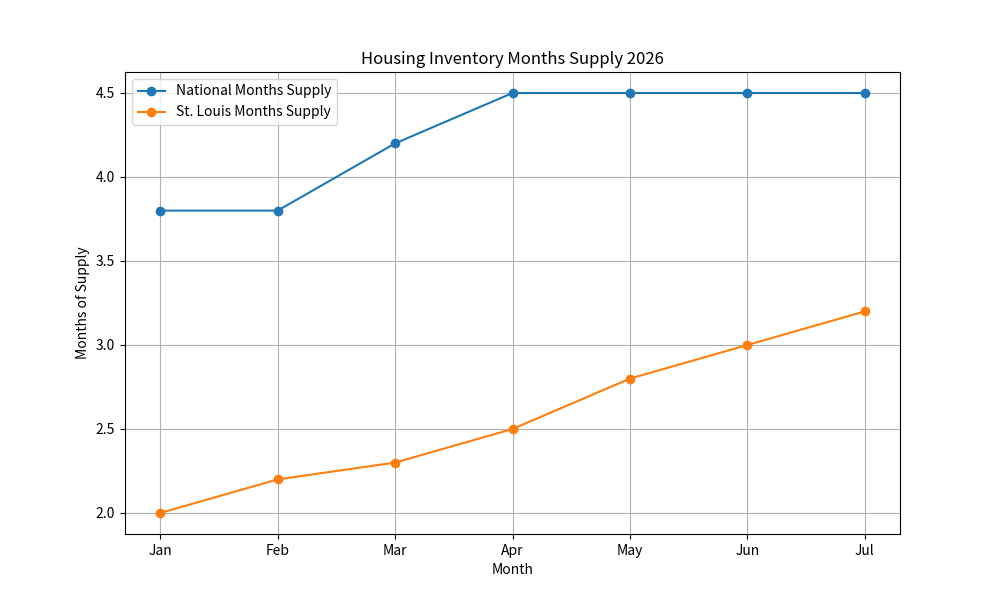
The graph above tracks national supply climbing steadily toward 4.5 months while St. Louis follows a more gradual path from tighter levels (around 2.0 months early in the year) toward 3.0-3.2 months by mid-year. This visual underscores the local market's relative resilience.
The End of Seller Frenzy: Why Homes Are Sitting Longer
One of the most significant changes in July 2026 is that sellers can no longer rely on the automatic frenzy of previous years. During the height of the market, properties often received multiple offers within days, frequently above the asking price with waived contingencies. Those conditions have eased as inventory builds. Days on market (DOM) have increased modestly—sometimes by 3-6 days for average listings—according to local reports. Homes that are slightly overpriced or need work are now sitting for 30-60+ days, forcing price reductions in many cases.
From St. Louis REALTORS® data, pending sales have softened in several categories (down around 7% year-over-year in spring snapshots), while inventory growth provides buyers with alternatives. Median sales prices for single-family residential homes have still risen about 7.4% to around $343,800 in recent readings, but this growth is uneven. Townhouse and condo segments show more variability, with some median prices dipping slightly.
Why the shift? There are a few reasons for the change. First, the gradual increase in listings gives buyers leverage—they can shop around rather than panic-buy. Second, persistent mortgage rates around 6.5-7% due to sticky inflation reduce buyer pools, particularly for first-timers and move-ups. Third, many long-time owners locked into sub-4% rates are reluctant to sell unless necessary, slowing overall turnover. The result is a market where only well-presented, competitively priced homes sell quickly.
Local real estate professionals note that in suburbs like Chesterfield, Ballwin, and Kirkwood, move-in-ready homes in family neighborhoods still attract strong interest and close near asking. However, properties needing updates or in less desirable pockets require adjustments. Sellers who stage effectively, invest in professional photography, and price based on recent comparable sales (comps) within the last 30-60 days fare much better. Those who don't often face longer DOM and eventual concessions.
Practical seller advice in this environment includes:
- Getting a professional pre-listing inspection to address issues upfront.
- Considering minor cosmetic updates like fresh paint or landscaping that yield high ROI.
- Being flexible on closing dates or offering rate buydowns to sweeten deals.
- Pricing 3-5% below peak expectations if the home isn't pristine.
This new reality doesn't mean sellers are losing power entirely—St. Louis remains more balanced than many overheated coastal markets—but the days of effortless premium sales are behind us.
Buyers Regain Leverage: Inspections, Negotiations, and Opportunities
On the buyer side, the rising inventory is a welcome development. With more homes available, particularly in the $250,000-$400,000 range that appeals to many local families, purchasers can afford to be more deliberate. Inspection contingencies are back in play—a major shift from the waive-everything era. Buyers are successfully negotiating repairs for items like roofs, HVAC systems, foundations, or cosmetic issues that would have been deal-breakers before.
Redfin and Realtor.com data for St. Louis confirm inventory gains of 15%+ year-over-year in some periods, with homes still selling faster than the national average but with more room for due diligence. Median prices around $300,000-$340,000 for the metro area keep St. Louis relatively affordable compared to national figures, attracting relocators from higher-cost regions.
Well-priced, move-in-ready homes—especially those with modern kitchens, updated baths, and energy-efficient features—continue to move within 2-4 weeks. These properties often see 1-3 offers rather than 10+, allowing for cleaner negotiations. Buyers in competitive suburbs like St. Charles County (often under 3 months' supply) still need to act decisively but can include standard contingencies without automatic rejection.
Key buyer strategies for July 2026:
- Secure strong pre-approval letters highlighting financial readiness.
- Work with experienced local agents familiar with neighborhood micro-trends.
- Focus on total cost of ownership, including taxes, insurance, and potential rate buydowns.
- Prioritize homes with inspection reports already available or be prepared to negotiate credits.
- Consider emerging opportunities in condo/townhome segments where inventory growth is more pronounced.
Homes aren't necessarily cheaper, but buyers have something they haven't had in years: more choices and more negotiating power.
Neighborhood Spotlights and Segment Breakdowns
- St. Louis City vs. County Dynamics: The City proper shows median prices around $230,000-$280,000, with more inventory growth in certain revitalizing areas like South City and The Grove. County suburbs maintain higher medians ($320k+) and tighter supply in top school districts.
- Single-Family Homes: These dominate the market with stronger price appreciation (7-10% YoY in desirable areas) and faster turnover for updated properties.
- Condos and Townhomes: More options are emerging, with some price softness creating entry points for younger buyers or downsizers.
- Luxury Segment ($750k+): Move-in-ready luxury homes in Ladue, Clayton, and West County continue to perform well, drawing cash buyers and executives.
- New Construction: Slower pace due to higher building costs supports values in existing stock but limits overall supply relief.
These variations highlight why a one-size-fits-all approach doesn't work—hyper-local knowledge is essential.
Broader Economic Influences and 2026 Outlook
Sticky inflation, as explored in depth by sources like Brookings, continues to shape the landscape by sustaining higher shelter costs and cautious monetary policy. This affects everything from buyer confidence to rental markets, where steady rents keep some potential buyers on the sidelines. Missouri's job market in sectors like healthcare, manufacturing, and logistics provides underlying support, helping St. Louis rank as a relative bright spot for the year.
Looking ahead to the second half of 2026, expect continued gradual inventory growth, especially in fall. Any meaningful rate cuts could accelerate activity, but even without them, the market should remain stable. Balanced conditions favor long-term participants over speculators. Sellers planning moves should list in late summer/early fall for optimal exposure. Buyers benefit from shopping now while options exist before potential seasonal tightening.
Additional considerations include property taxes, insurance costs (rising in some areas due to weather patterns), and home maintenance in older St. Louis housing stock. Energy-efficient upgrades can be strong selling points or negotiation levers.
Actionable Checklists for Buyers and Sellers
Seller Checklist
✅ Review recent comps via St. Louis REALTORS®.
✅ Stage and photograph professionally.
✅ Price competitively from day one.
✅ Prepare for negotiations on inspections.
✅ Market timing: Avoid major holidays.
Buyer Checklist
✅ Get pre-approved and understand rate options.
✅ Research neighborhoods thoroughly.
✅ Build in contingency buffers.
✅ Calculate full ownership costs.
✅ Partner with a knowledgeable agent.
Final Thoughts: A More Sustainable Market Ahead
The July 2026 St. Louis housing market reflects a maturing phase—rising inventory tempers the frenzy, steady prices reward preparation, and buyer tools like inspections return. While national 4.5-month supply influences the local scene, St. Louis's affordability and demand fundamentals keep it resilient. Whether you're buying, selling, or simply watching, data and strategy will drive success more than timing the "perfect" moment.
Overall, this is one of the healthiest markets St. Louis has seen in a while. Sellers can still earn excellent prices when their homes are priced correctly, and buyers finally have enough inventory to make thoughtful decisions instead of rushing into offers. It's no longer about trying to time the market—it's about understanding today's conditions and making smart moves based on them.
Ready to Buy or Sell in St. Louis? House Sold Easy Has You Covered!
Whether you're thinking about listing your home or exploring a cash offer, it's worth understanding all of your options before making a decision. The right choice depends on your timeline, your property's condition, and your goals. Contact House Sold Easy to discuss your situation and see what makes the most sense for you.Our St. Louis experts know every corner of this city and will make buying your dream home or selling your high-end property a breeze. Don’t miss out on the hottest market in the U.S.! Contact House Sold Easy today and let’s make your real estate goals happen!