Why Mid-Summer 2026 Is Ideal for STL First-Time Buyers
Jul 27, 2026
Written by David Dodge
If you spent any time trying to buy your first home in St. Louis between 2021 and 2024, you probably still have some emotional scar tissue.
You remember the drill all too well: lining up on a rainy Sunday afternoon outside a modest brick bungalow in Tower Grove South or Maplewood, surrounded by fifteen other anxious couples. You had a pre-approval letter in hand, only to be told by Monday morning that the property received twenty-two offers, sold for $45,000 over asking price, and went to an out-of-state investor who paid cash and waived every single inspection and appraisal contingency. For years, being a first-time homebuyer in the Gateway City felt less like achieving the American Dream and more like participating in a financial gladiator arena where only the most reckless or cash-flush survived.
Take a deep breath. Exhale. That era is officially over.
As we reach mid-summer 2026, the St. Louis metropolitan housing market is undergoing its most significant structural rebalancing in over half a decade. The frantic, panic-driven bidding wars have systematically cooled down, replaced by a measured, rational marketplace where buyers can actually act like buyers again. At the center of this transformation is one crucial metric: active housing inventory across the St. Louis metro is up approximately 10% year-over-year.
This isn't just a minor statistical blip; it is a psychological tipping point that is shifting leverage back toward first-time buyers who have been patiently sitting on the sidelines, saving their down payments, and waiting for sanity to return to local real estate.
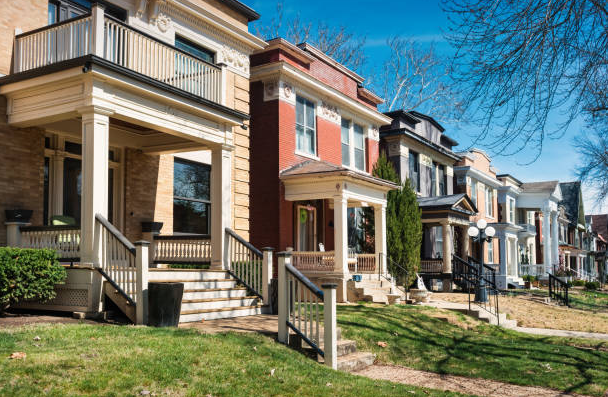
Classic St. Louis brick architecture during summer. Source: The Wallner Team
The Economics of the Exhale: What 10% More Inventory Actually Means
To understand why mid-summer 2026 represents a golden window of opportunity for St. Louis newcomers and first-time buyers, we have to look under the hood of the local supply-and-demand engine. For years, the St. Louis market suffered from a profound inventory drought. When housing supply drops below a certain threshold, buyer behavior becomes governed by artificial scarcity. Fear of Missing Out (FOMO) overrides financial diligence, forcing buyers to make split-second decisions on properties they have only walked through for fifteen minutes.
Today, that dynamic has fundamentally broken down. Comprehensive mid-summer market data reveals that sellers can no longer dictate one-sided terms. For example, as reported in the
When you inject over six thousand active listings into a regional market defined by steady, localized demand, two things happen immediately:
-
The mathematical probability of multiple-offer bidding wars plummets. Instead of ten buyers chasing a single listing on a weekend, those ten buyers now have three or four viable properties to evaluate across target neighborhoods like Shaw, Benton Park, University City, or St. Peters.
-
Days on Market (DOM) expands, restoring time to the transaction. Homes are no longer vanishing between Friday listing and Sunday sunset.
STL Metro Housing Market: 3-Year Mid-Summer Evolution
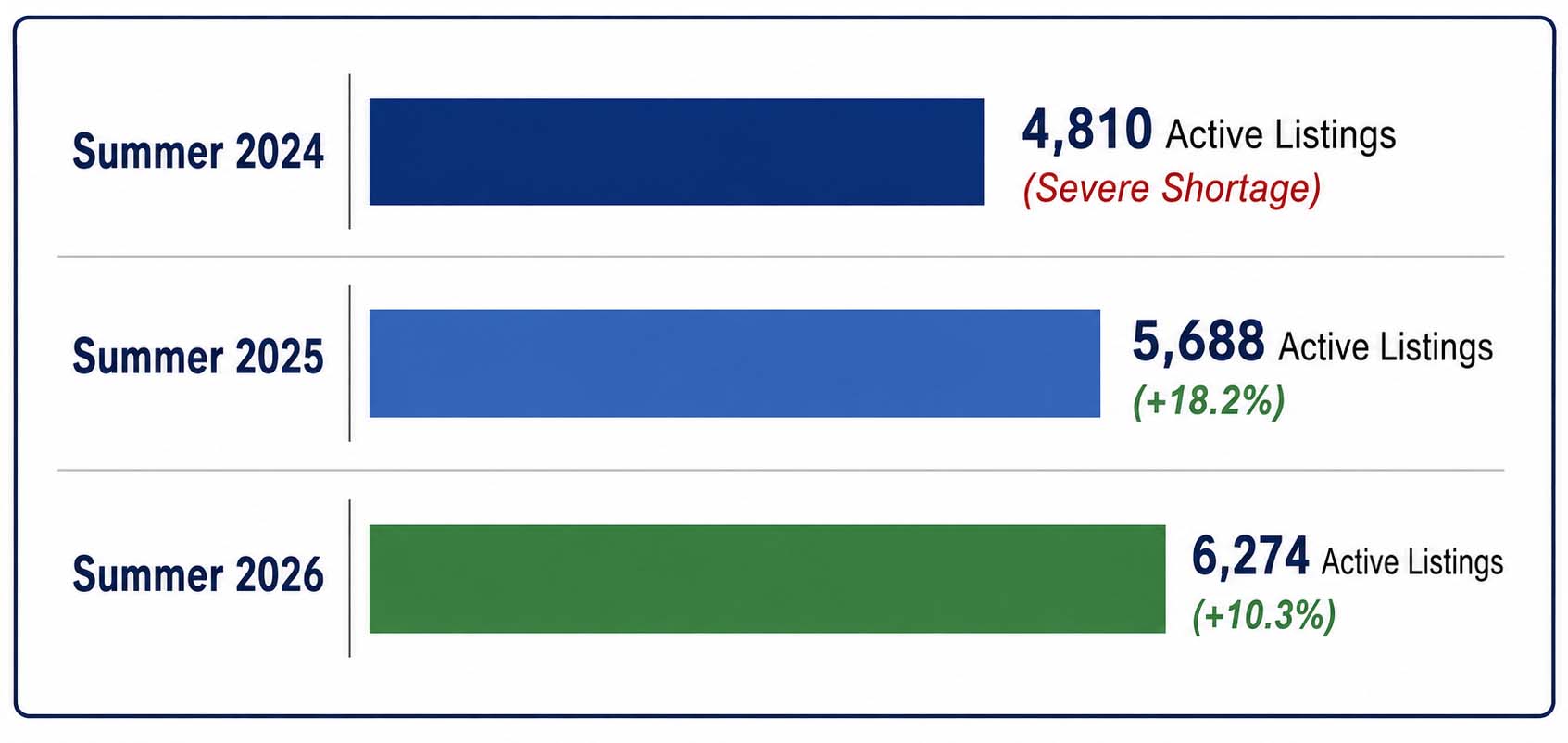
The data graph and comparative table below illustrate precisely how the St. Louis housing market has transitioned from an acute seller's monopoly into a balanced, negotiation-friendly environment for first-time buyers.
ST. LOUIS METRO ACTIVE INVENTORY GROWTH
(MID-SUMMER 2024 - MID-SUMMER 2026)
| Market Metric | Mid-Summer 2024 (Peak Frenzy) |
Mid-Summer 2025 (Early Cooling) |
Mid-Summer 2026 (Buyer Window) |
YoY Change 2025 to 2026 |
Market Impact for 1st-Time Buyers |
|---|---|---|---|---|---|
|
Active Inventory |
4,810 homes |
5,688 homes |
6,274 homes |
+10.3% |
Substantial increase in home selection and variety. |
|
Median Days on Market |
18 days |
40 days |
44 days |
+4 days |
More time for second showings and thoughtful decisions. |
|
Listings with Price Cuts |
8.4% |
16.7% |
16.1% |
−0.6% |
More realistic pricing by sellers with added negotiating room. |
|
Share Waiving Inspections |
~45% (Est.) |
~20% (Est.) |
<5% (Est.) |
−15.0% |
Critical inspection and financing protections have returned. |
|
Bidding War Frequency |
68% of sales |
32% of sales |
~18% of sales |
−14.0% |
Fewer bidding wars reduce appraisal gaps and overpaying. |
|
Median Listing Price |
$285,000 |
$300,000 |
$290,000 |
−3.3% |
Softer asking prices improve affordability for new buyers. |
This data tells a compelling story. Notice that while active inventory is up by over 10%, the median listing price across the broader Missouri-Illinois metropolitan area has adjusted downward by 3.3% to $290,000, and homes are spending a median of 44 days on the market. Furthermore, roughly one in six homes on the market (16.1%) has undergone an official price reduction.
Why does a 44-day median market time matter so much? Because in real estate psychology, Day 31 is the magic number. When a listing sits on the Zillow or MARIS MLS feed for more than thirty days without going pending, the seller's mindset shifts from "I am going to get a bidding war" to "Why hasn't my house sold yet?" That anxiety is the first-time buyer's greatest negotiating asset.
The Death of the "Waive Everything" Era: Why Inspections Are Back
Perhaps the most damaging legacy of the pandemic-era housing boom was the normalization of waiving home inspection contingencies. In a desperate bid to win contracts against all-cash buyers and institutional investors, thousands of first-time buyers across St. Louis were advised to check the box waiving their right to inspect the property or request repairs.
In a city like St. Louis, waiving an inspection is tantamount to financial Russian roulette.
While St. Louis is world-renowned for its breathtaking historic architecture—from the stately Victorian mansions of Lafayette Square to the sturdy 1920s Arts & Crafts brick bungalows of South City and the mid-century stone ranches of West County—these homes come with unique, age-related mechanical and structural profiles. A century-old brick home is a masterpiece of craftsmanship, but it also contains systems that require rigorous professional scrutiny before you hand over your life savings.
What First-Time Buyers Can Finally Inspect Again
With inventory up 10% and competition cooling down, sellers in mid-summer 2026 know that demanding an inspection waiver is a surefire way to scare off qualified buyers. In fact, recent market analysis from
Here are the four St. Louis-specific structural inspections you can now execute with zero fear of having your offer immediately tossed in the trash:
-
The Lateral Sewer Line Scope: St. Louis city and many older inner-ring suburbs (like University City, Maplewood, and Clayton) feature mature tree canopies and subterranean sewer pipes made of clay tile or cast iron that date back fifty to one hundred years. Over decades, tree roots infiltrate these clay joints, or the pipes crack and collapse under shifting soil. A lateral sewer repair can cost anywhere from $5,000 to $15,000. Today, you can include a specialized sewer camera scope contingency in your offer, and if a break is found, negotiate for the seller to repair it or credit you the funds at closing.
-
Historic Brick Tuckpointing and Foundation Walls: St. Louis sits on limestone and clay soils that expand and contract with seasonal moisture changes. Older brick homes rely on lime-based mortar that gradually deteriorates over decades—a process requiring "tuckpointing." Evaluating limestone rubble foundations for water intrusion and checking exterior brickwork for spalling or step-cracking is now standard operating procedure again.
-
Electrical System Modernization: Many charming South City and mid-county homes originally featured knob-and-tube wiring or older 60-amp electrical service panels. In 2026, buyers have the time and leverage to ensure electrical panels are updated to modern 100- or 200-amp circuit breakers capable of handling contemporary appliances, electric vehicle chargers, and central air conditioning systems.
-
Radon Gas Testing: Missouri's geology produces naturally occurring radon gas, an odorless, colorless radioactive gas that can accumulate in basements. Testing takes 48 hours. In the frantic bidding wars of 2022, buyers routinely skipped this health check; in summer 2026, requesting a radon test and asking for a $1,200 radon mitigation system if levels exceed 4.0 pCi/L is completely routine and accepted by sellers.
Anatomy of a Winning Mid-Summer 2026 Offer in STL
So, how does the actual purchase contract look different today compared to three years ago? When you work with a skilled local St. Louis Realtor in July 2026, your strategy shifts from defensive concessions (giving up your rights to win) to strategic negotiation (leveraging market data to optimize your financial position).
Let’s examine a side-by-side comparison of a standard first-time buyer offer during the frenzy versus what is successfully closing in mid-summer 2026 across the St. Louis metropolitan area:
| Offer Component | 2022–2023 "Frenzy" Offer | Mid-Summer 2026 "Balanced" Offer | Financial & Psychological Benefit |
|---|---|---|---|
|
Purchase Price |
$25,000–$50,000 over list price |
At list price or 2–4% under list price |
Preserves your hard-earned cash and instant home equity. |
|
Earnest Money Deposit |
3%–5% non-refundable upon acceptance |
1%–2% fully refundable during contingency periods |
Protects your liquidity if structural issues are uncovered. |
|
Inspection Contingency |
Waived entirely (information only, no repairs) |
Full 10-day inspection period with repair or credit requests |
Helps avoid inheriting expensive roofing, plumbing, or structural repairs. |
|
Appraisal Contingency |
Full appraisal gap coverage (buyer pays difference in cash) |
Standard appraisal protection (contract voidable if appraisal is low) |
Prevents paying above the property's bank-supported market value. |
|
Seller Concessions |
None; buyers often covered seller-related closing costs |
2%–3% seller-paid closing costs or mortgage rate buydown |
Reduces upfront cash needed at closing and lowers monthly payments. |
|
Closing Timeline |
14–21-day rushed closing to satisfy the seller |
30–45-day standard closing aligned with lease expiration |
Avoids double housing costs and reduces moving stress. |
The Rise of the Seller-Paid 2-1 Mortgage Buydown
Notice that last row regarding seller concessions. One of the most powerful financial tools available to first-time buyers in mid-summer 2026 is the Seller-Paid Interest Rate Buydown.
Because mortgage interest rates in 2026 remain higher than the generational lows of the 2010s, monthly affordability is a legitimate concern for first-time buyers. However, instead of asking a seller for a straight $10,000 price reduction—which only lowers your monthly mortgage payment by roughly $60 per month—smart St. Louis buyers are asking sellers to contribute that same $10,000 toward a 2-1 Temporary Rate Buydown or a permanent mortgage point buydown.
Here is how a 2-1 buydown works in practice on a typical $280,000 St. Louis home purchase with a 5% down payment ($266,000 loan amount):
-
Year 1: Your mortgage interest rate is reduced by 2 full percentage points below the prevailing market rate. Your monthly principal and interest payment is slashed by nearly $350 per month, giving you critical financial breathing room as you move in, buy furniture, and adjust to homeownership.
-
Year 2: Your rate is reduced by 1 full percentage point below the note rate, saving you roughly $180 per month.
-
Year 3 & Beyond: The rate returns to the standard fixed note rate, by which time your income has likely increased, or you have taken advantage of future refinancing opportunities.
In 2023, asking a seller to pay for your mortgage buydown would have gotten you laughed out of the multiple-offer presentation. In mid-summer 2026, with listings sitting for an average of 44 days, sellers are eagerly agreeing to these concessions to secure a clean, reliable closing with a qualified first-time buyer.
STL Submarket Spotlight: Where Buyers Are Winning Right Now
While headlines often talk about "the St. Louis real estate market" as a singular entity, seasoned locals know that Greater St. Louis is actually a patchwork quilt of distinct submarkets, municipalities, and historic neighborhoods, each possessing its own micro-economic climate.
The 10% inventory surge is not distributed uniformly; certain neighborhoods that were virtually impenetrable to first-time buyers two years ago are now experiencing the most significant cooling and inventory accumulation. Let’s break down four primary submarkets where newcomers can find extraordinary value and negotiation leverage right now.
1. South City (Tower Grove South, Shaw, Bevo Mill, Benton Park)
-
The Vibe: Walkable, urban, historic red-brick architecture, vibrant local culinary scenes, proximity to Tower Grove Park and the Missouri Botanical Garden.
-
The Market Reality in July 2026: For years, South City was the epicenter of first-time buyer bidding wars. Classic stained-glass brick bungalows in Shaw or Tower Grove South routinely drew twenty offers within hours. Today, active listings in South City have increased significantly. While turnkey, fully renovated homes overlooking the park still command strong attention, the "slightly dated" homes—those needing cosmetic updates like new kitchen countertops, fresh paint, or refinished hardwood floors—are sitting for 40 to 50 days.
-
The Strategy: Target classic two-bedroom brick bungalows in Bevo Mill, Northampton, or the southern edges of Tower Grove South that have been on the market for 3 weeks. Offer list price with a request for the seller to cover a $5,000 closing cost credit for electrical or sewer lateral updates.
2. Mid-County & Inner Ring (Maplewood, Richmond Heights, University City)
-
The Vibe: The ultimate bridge between urban energy and suburban convenience; central location, excellent highway access (I-64/Highway 40), tree-canopied streets, and thriving boutique main streets like Maplewood's Manchester Road or U-City's Delmar Loop.
-
The Market Reality in July 2026: Single-family homes in these inner-ring suburbs remain highly sought after due to short commutes to Washington University, BJC Healthcare, and downtown Clayton. However, the real story here is the expansion of attached housing inventory. According to local real estate analysis in
St. Louis Housing Stats for St. Louis and St. Charles -
The Strategy: For newcomers who want a walkable mid-county lifestyle without the $400,000+ single-family price tag, mid-summer 2026 is the ideal time to secure a classic 1920s architectural condo or townhome in University City or Richmond Heights. Condo inventory is particularly well-supplied right now, allowing buyers to negotiate HOA fee credits or appliances included in the sale.
3. St. Charles County (St. Charles, St. Peters, O'Fallon, Wentzville)
-
The Vibe: Master-planned suburban communities, modern construction, highly rated school districts, extensive parks and trail systems, and a booming job corridor along Interstate 70 and Highway 364.
-
The Market Reality in July 2026: During the pandemic, St. Charles County experienced massive price acceleration as buyers fled urban centers for larger yards and home offices. Today, massive residential new construction developments in Wentzville, O'Fallon, and St. Peters have finally caught up with demand. This new construction spillover has relieved pressure on existing suburban homes, with
St. Charles County months of inventory -
The Strategy: Use the abundance of new construction builder incentives as leverage against individual sellers of existing homes. When touring a 15-year-old home in St. Peters, point out that new builders down the road are offering free finished basements and rate buydowns, compelling existing homeowners to price competitively and offer closing concessions.
4. North County & Florissant (The Unmatched Affordability Play)
-
The Vibe: Quiet, well-established suburban neighborhoods characterized by solid mid-century brick ranches, mature lots, and incredible community pride at a fraction of central corridor prices.
-
The Market Reality in July 2026: If your primary goal is maximizing square footage, yard space, and structural build quality while keeping your monthly mortgage payment as low as humanly possible, North County is the undiscovered jewel of the Midwest. Median home prices in communities like Florissant, Hazelwood, and Ferguson routinely range from $160,000 to $220,000.
-
The Strategy: You can secure a pristine, 1,500-square-foot brick ranch with a finished basement and a two-car garage in Florissant for less than the price of a one-bedroom condo in Austin, Denver, or Chicago. With inventory up across the board, FHA and VA buyers—who were routinely rejected during the bidding frenzy due to stringent government appraisal standards—are now welcomed with open arms by North County sellers.
The First-Time Buyer’s Mid-Summer 2026 Playbook
Knowing that the market has tilted in your favor is only half the battle; executing a flawless purchase requires a modern, disciplined strategy. You cannot approach homebuying in July 2026 using outdated advice from 2021, nor should you approach it with passive complacency.
Here is your comprehensive, five-step step-by-step playbook for seizing the mid-summer inventory surge and closing on your first St. Louis home with maximum equity and minimum stress.
Step 1: Upgrade from Pre-Qualification to Fully Underwritten Pre-Approval
Do not confuse a generic, five-minute online "pre-qualification" letter with a Fully Underwritten Pre-Approval. In a balanced market, sellers are looking for certainty. When you apply for a mortgage with a reputable local St. Louis lender, ask them to run your file through complete manual underwriting before you even make an offer. This means an underwriter has already verified your W-2s, tax returns, credit scores, and bank statements. When you submit an offer, your lender can state: "This buyer is 100% underwritten; the only condition remaining is the home appraisal." This gives your offer the closing strength of a cash buyer while retaining your mortgage financing.
Step 2: Hunt the "Day 31+" MLS Listings
Train your eye to look past the brand-new listings that hit the market on Thursday morning. While everyone else is touring the shiny new listings on Saturday afternoon, work with your Realtor to filter the MARIS MLS database for homes with a DOM (Days on Market) between 31 and 75 days.
Why? Because a listing that has sat for five weeks is often suffering from minor pricing overreach or poor staging—not structural flaws. The seller who listed at $315,000 in early June and has heard crickets for six weeks is ripe for an intelligent, well-justified offer at $295,000 accompanied by a request for a 2% closing cost credit. This is where the real bargains of summer 2026 are found.
Step 3: Bundle Your Inspection Requests into a Single Strategic Credit
When your home inspection reveals typical St. Louis maintenance items—say, an aging water heater, a minor tuckpointing need on the chimney, and an older GFCI outlet—do not send the seller an exhaustive, twenty-item repair checklist demanding they hire five different contractors before closing. Sellers hate managing pre-closing repairs, and contractors are notoriously busy during summer.
Instead, quantify the total financial value of those repairs (e.g., $4,500) and submit a Client Repair Credit Request. Ask the seller to reduce the purchase price by $4,500 or, even better, credit you $4,500 at closing toward your closing costs or interest rate buydown. This keeps the transaction moving forward smoothly while putting the money directly into your pocket so you can hire your own trusted contractors after move-in.
Step 4: Leverage Local Down Payment Assistance (DPA) Programs
Because the market is no longer moving at warp speed, first-time buyers finally have the time required to process and close with valuable local housing grant programs. In 2026, several regional programs are actively funded and ready to help St. Louis newcomers:
-
MHDC (Missouri Housing Development Commission) First Place Loan Program: Offers first-time buyers cash assistance up to 4% of the loan amount for down payment and closing costs, paired with competitive 30-year fixed interest rates.
-
St. Louis City & County CDA Housing Grants: Many municipal community development agencies offer forgivable loans ranging from $3,000 to $10,000 for qualified first-time buyers purchasing within specific geographic target zones. When listings sat for only 48 hours, sellers refused to wait the extra two weeks required for municipal grant compliance; today, sellers are more than happy to accommodate DPA timelines.
Step 5: Keep Emotions Out of the Negotiation Room
When you fall in love with a charming Craftsman bungalow in Maplewood or a mid-century modern gem in Olivette, it is easy to let emotion cloud your financial judgment. Remember the core lesson of mid-summer 2026: inventory is up 10%, and you have choices.
If a seller refuses to negotiate on a property that has been sitting for 50 days, or if they stubbornly refuse to address a confirmed sewer lateral collapse or foundation crack, be fully prepared to walk away. In today’s market, another wonderful home will hit your MLS feed within days. Your willingness to walk away is your ultimate source of negotiating power.
Expert Q&A: Addressing the Real Fears of Buying in 2026
Even with improving inventory and cooling competition, leaping into first-time homeownership is an intimidating financial milestone. Let’s address the three most common questions and lingering anxieties we hear from St. Louis buyers sitting on the fence this summer.
Q1: "Shouldn't I just wait until 2027 to see if mortgage interest rates drop back down to 4% or 5%?"
This is the most common trap waiting for first-time buyers today. While it is natural to wish for the rock-bottom interest rates of 2020 and 2021, professional economists and Federal Reserve projections agree that those sub-4% rates were an historical anomaly caused by emergency economic stimulus. Waiting for 4% mortgage rates is like waiting for gas to return to $1.50 a gallon.
More importantly, consider what happens if mortgage rates do drop by a full percentage point over the next twelve months. The moment mortgage rates drop into the mid-5% range, tens of thousands of sidelined buyers across the St. Louis region will rush back into the market simultaneously. That 10% inventory surplus will evaporate overnight, bidding wars will reignite, home prices will spike by $20,000 to $30,000, and you will once again be forced to waive your inspection contingencies.
The Winning Strategy: Buy your home now during the mid-summer 2026 window while inventory is high, prices are softening, and you can negotiate seller-paid closing costs. You are buying the home at a discount today; if interest rates drop significantly next year, you can simply refinance your mortgage to capture the lower rate while sitting on appreciated home equity. As the old real estate adage goes: "Marry the house, date the rate."
Q2: "With inventory rising and prices down 3.3% year-over-year, is the St. Louis housing market about to crash?"
Let's be unequivocally clear: a 3.3% adjustment in median asking price combined with a 10% increase in inventory is not a housing crash; it is a healthy, desperately needed normalization.
A market crash requires widespread financial distress, forced liquidations, and massive oversupply (such as six to nine months of inventory). As reported by local real estate data, even with our recent inventory gains,
Furthermore, St. Louis possesses one of the most resilient, stable housing economies in the United States. Unlike highly volatile boom-and-bust markets in the Sunbelt or West Coast that experienced 40% price spikes followed by sharp corrections, St. Louis is anchored by robust healthcare systems (BJC, SSM, Mercy), world-class universities (Washington University, SLU), major corporate headquarters (Edward Jones, Emerson, Purina), and a growing tech and biotech corridor (Cortex Innovation Community). This economic foundation ensures long-term, steady property value appreciation without extreme volatility.
Q3: "I'm moving to St. Louis from out of state. How do I navigate local nuances like municipal occupancy permits?"
One unique aspect of St. Louis real estate that catches newcomers off guard is the municipal structure. St. Louis County is made up of nearly ninety distinct incorporated municipalities (such as Ballwin, Kirkwood, Webster Groves, Ferguson, and Maryland Heights), plus the independent City of St. Louis.
Many of these municipalities require an Occupancy Inspection and Permit before a home can change hands or be occupied. This is a basic safety and code-compliance inspection conducted by the city inspector—checking for functioning smoke detectors, proper handrails, intact GFCI outlets, and basic structural safety. In your purchase contract, ensure your Realtor explicitly stipulates that the seller is responsible for ordering, paying for, and successfully passing the municipal occupancy inspection prior to closing. In mid-summer 2026, sellers routinely handle this without hesitation.
Your Moment of Opportunity in the Gateway City
For the past five years, the narrative surrounding first-time homebuying has been dominated by frustration, exclusion, and exhaustion. The mid-summer 2026 St. Louis real estate market is writing a refreshing new chapter.
With active inventory up more than 10% across the metro, asking prices moderating, and homes spending a civilized 44 days on the market, the pendulum of leverage has finally swung back toward the prepared, informed homebuyer. The days of waiving your inspection rights, draining your emergency savings to cover forced appraisal gaps, and competing against twenty blind bids are fading into the rearview mirror.
Whether your dream is sipping morning coffee on the front porch of a historic brick Craftsman in Shaw, hosting backyard barbecues in a spacious suburban home in St. Peters, or enjoying effortless walkability in a University City condo, the Gateway City is open for business on your terms.
You don't need to rush, and you certainly don't need to panic. Get your underwritten pre-approval in order, assemble a trusted local real estate and inspection team, study the inventory data, and step out into the summer sunshine. Your best chance to claim your piece of St. Louis homeownership isn't some distant promise in the future—it is waiting for you right now, this very summer.
Ready to Buy or Sell in St. Louis? House Sold Easy Has You Covered!
Whether you're thinking about listing your home or exploring a cash offer, it's worth understanding all of your options before making a decision. The right choice depends on your timeline, your property's condition, and your goals. Contact House Sold Easy to discuss your situation and see what makes the most sense for you.Our St. Louis experts know every corner of this city and will make buying your dream home or selling your high-end property a breeze. Don’t miss out on the hottest market in the U.S.! Contact House Sold Easy today and let’s make your real estate goals happen!