Top Ranked but Tough: Why St. Louis Buyers Still Struggle
Apr 25, 2026
Written by David Dodge
You’ve seen the headlines. National real estate outlets like
But if you’re actually standing on a sidewalk in Tower Grove or Kirkwood, refresh button in hand, the "dream" feels more like a contact sport.
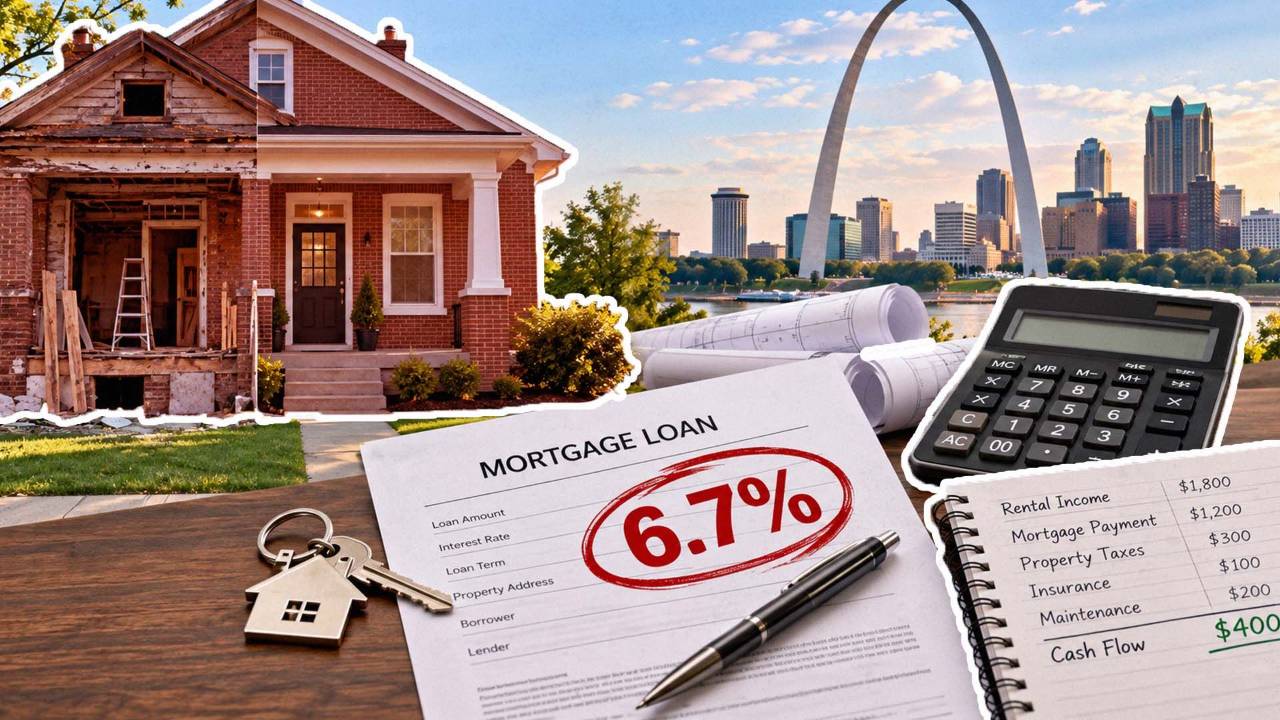
Is St. Louis good for first-time home buyers? Yes, statistically. But why is buying a house still hard in 2026? Because "affordable" doesn't mean "available," and "cheap" doesn't mean "easy."
Let’s pull back the curtain on why the top-ranked city for beginners is still leaving so many people locked out in the cold.
1. The "Top City" Mirage: Breaking Down the 2026 Rankings
To understand the struggle, we first have to look at why the experts love us. The recent
-
Income-to-Price Ratio: While the national median home price hovers in the mid-$400ks, St. Louis stays grounded. In early 2026, the local median sale price for the metro area is roughly $285,000.
-
The 30% Rule: For a median-earning young professional in St. Louis, a mortgage payment on a typical starter home still fits within the recommended 30% of their monthly income—a feat that is virtually impossible in 70% of the U.S. right now.
-
Inventory Growth: Unlike the complete "lock-in" effect of 2024, active listings in the St. Louis MSA are actually up about 10.8% year-over-year.
The Disconnect: These rankings are built on macro data. They don't account for the "investor tax," the "boomer hold," or the lightning-fast speed of the local sub-markets.
2. The Seven-Day Squeeze: Speed is the New Currency
If you’re asking why buying a house is still hard in 2026, the answer is often found in the "Days on Market" (DOM) stats. While the median age of all listings might be 56 days, the homes you actually want—the "turnkey" starter homes—are disappearing in a heartbeat.
According to recent
This creates a "split market." If a house is slightly overpriced or needs work, it sits. But if it’s a clean 3-bed, 2-bath in a solid school district, you aren't just competing with other first-time buyers—you're competing with a clock that is ticking faster than your lender can send a pre-approval.
This is a deep-dive exploration into the paradox of the St. Louis housing market in 2026. The structure below is designed to be a high-conversion blog post, optimized for readability and authority.
3. The Generational Wall: Boomers vs. First-Timers
Here is the uncomfortable truth: St. Louis isn't just affordable for you; it's affordable for everyone.
The
In St. Louis, this plays out in a specific way. Older generations are "right-sizing." They are selling large family homes in West County and moving into the same $300k–$400k bungalows and condos that first-time buyers are targeting.
-
The Advantage: Boomers often come with 30 years of home equity, allowing them to make all-cash offers or waive appraisals.
-
The Struggle: A first-time buyer with a 5% down payment and an FHA loan simply cannot compete with a cash offer that closes in 10 days
4. The "Rent Trap" is Getting Stickier
You’d think that if buying was hard, people would just wait and rent. But the St. Louis rental market is providing no sanctuary.
Recent data from
5. Location Paradox: Where the "Affordable" Homes Actually Are
When a national report says St. Louis is affordable, they are often looking at the entire MSA, which includes everything from the Illinois side to the far reaches of St. Charles.
As noted in the
However, many first-time buyers are limited to specific hubs like:
-
South City (Lindenwood Park, Northampton)
-
Maplewood / Richmond Heights
-
St. Charles County (O'Fallon, Wentzville)
In these specific pockets, inventory is actually down, and the "affordability" cited in national news feels like a myth. You might find a house for $150,000 in certain zip codes, but it likely requires $50,000 in structural repairs—something most first-time buyers, already stretched thin by 6.3% mortgage rates, simply cannot afford
How to Win in St. Louis (The 2026 Strategy)
If you are determined to break into the market this year, "hoping for a deal" is not a strategy. You have to adapt to the current reality:
-
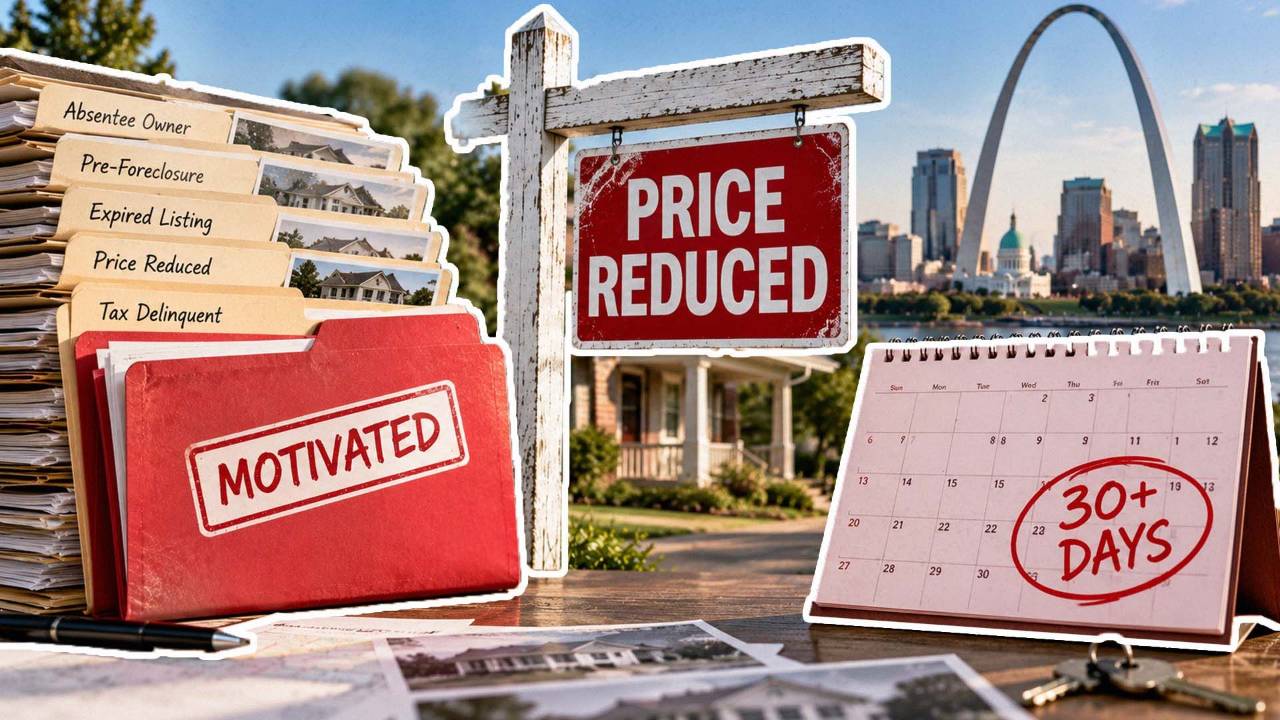
Look for the "Lingerers": Stop chasing the house that hit the market two hours ago. Look for homes that have been sitting for 30+ days. In 2026, the
sale-to-list ratio for these homes -
The "Pre-Approval Plus": A standard pre-approval isn't enough in a market where 1 in 3 homes goes in a week. Work with a local St. Louis lender who can offer "underwritten approval," which is as close to a cash offer as a financed buyer can get.
-
Broaden the Map: If Tower Grove is too hot, look at the growth happening in Dutchtown or North County. The "top city" ranking applies to the whole region—don't let a zip code keep you from building equity.
The Final Verdict: Is St. Louis Still the Promised Land?
The data doesn’t lie: St. Louis remains one of the few metropolitan anchors where the American Dream of homeownership is still mathematically possible for the average earner. When you compare our $285,000 median price to the $1M+ price tags of the Coasts, the "Top City" title is well-earned.
However, the "struggle" is not a failure of the market—it’s a change in the rules.
In 2026, the St. Louis market has matured. It is no longer a "hidden gem" where you can casually browse on a Sunday and close by Friday. It is a high-velocity environment where speed is the only true currency. If you are still struggling to buy, it’s likely because you’re playing by 2021 rules in a 2026 reality.
The Bottom Line
If you can look past the noise of the headlines and the frustration of a lost bidding war, the value proposition here is still unbeatable. You aren't just buying a house; you’re buying stability in an era of national housing volatility.
My advice? Stop waiting for the "perfect" time or for rates to drop back to 3%. In St. Louis, the best time to buy was yesterday; the second-best time is the moment you decide to stop competing for the "popular" houses and start looking for the opportunity houses—the ones that have sat for two weeks, the ones with dated carpet, or the ones in emerging neighborhoods like Dutchtown.
St. Louis is a top city for those who are willing to be proactive, not just reactive. The door is open, but you have to be the first one to the handle.
Ready to Buy or Sell in St. Louis? House Sold Easy Has You Covered!
Navigating St. Louis’ red-hot luxury market doesn’t have to be a headache. With House Sold Easy, it’s all about less hassle—we’ve got you covered from start to finish. Our St. Louis experts know every corner of this city and will make buying your dream home or selling your high-end property a breeze. Don’t miss out on the hottest market in the U.S.! Contact House Sold Easy today and let’s make your real estate goals happen!