Best St. Louis Neighborhoods for Commercial Real Estate 2026
Mar 13, 2026
Written by David Dodge
A beginner-friendly breakdown of Midtown, The Grove, Cortex Innovation District, and South Grand — the four neighborhoods investors and business owners should be watching right now.
Why St. Louis Deserves Your Attention
Here's something most people outside the Midwest don't realize: St. Louis is quietly becoming one of the more compelling commercial real estate stories in America right now. Not because it's flashy. Not because it's making national headlines. But because the fundamentals — affordable land, strong anchor institutions, a central location, and a growing innovation economy — are stacking up in ways that reward patient, informed investors.
But here's the catch: not all of St. Louis is growing equally. This is a city of neighborhoods, and the commercial real estate opportunities are concentrated in specific pockets. Buy in the right submarket and you could be riding a wave of appreciation and tenant demand. Buy the wrong one, and you might be waiting a very long time for the phone to ring.
That's what this guide is about: cutting through the broad strokes and going neighborhood by neighborhood to show you exactly where the commercial real estate action is in St. Louis right now.
New to commercial real estate? "Commercial real estate" refers to any property used for business purposes — office buildings, retail storefronts, mixed-use developments (combining shops, offices, and apartments in one building), warehouses, and more. If a business operates there, it's commercial real estate.
We'll walk through four of the most exciting submarkets in St. Louis: Midtown, The Grove, the Cortex Innovation District, and South Grand. For each one, we'll explain what's happening, why it matters for investors and business owners, and what a beginner should know before getting involved.
Whether you're looking for your first investment property, searching for a space to open a business, or simply trying to understand the St. Louis market, by the end of this guide, you'll have a clear, practical picture of where the city is heading.
Setting the Stage: The St. Louis Commercial Market at a Glance
Before diving into neighborhoods, let's ground ourselves in some numbers about the broader St. Louis commercial real estate market — because the city-wide fundamentals are what make the neighborhood stories possible.
According to Greater St. Louis, Inc., the St. Louis metro is the 19th largest office market in the United States, with over 145 million square feet of commercial space across office, industrial, and retail categories. What really stands out, though, is the price advantage:
- Office space: Class A office in St. Louis averages around $29.65 per square foot — roughly 38% below the national average of $47.94.
- Industrial space: St. Louis industrial leases average about $7.46 per square foot, compared to $12.14 nationally.
- Overall vacancy: The office market closed 2025 with a vacancy rate of around 18.5%, in line with national trends but with certain high-demand submarkets performing significantly better.
That affordability advantage is a core reason why national companies, healthcare systems, and technology firms are choosing St. Louis over more expensive coastal markets. It also means that when you invest here, your dollar stretches further — a key advantage for beginners working with limited capital.
Market intelligence from Cushman & Wakefield's quarterly St. Louis MarketBeat reports confirms that the strongest performing submarkets are those anchored by healthcare, technology, and education institutions. Spoiler alert: all four neighborhoods we're covering in this guide are directly connected to those anchors.
Now, let's go neighborhood by neighborhood.
1. Midtown St. Louis: The Central Corridor Finding Its Identity
What Is Midtown?
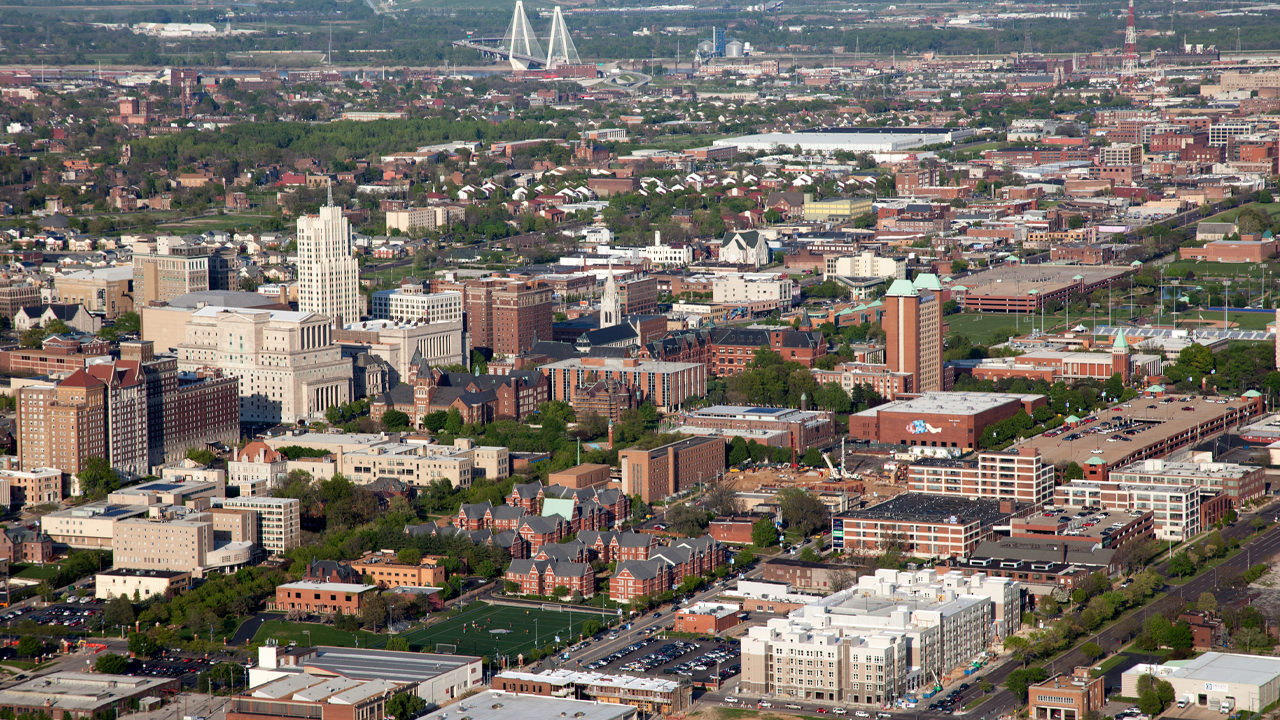
Midtown St. Louis is the geographic heart of the city — the stretch along the central corridor roughly between the Central West End to the west and downtown to the east. For a long time, it was the city's forgotten middle child. Not quite as polished as the Central West End, not as busy as downtown, not as trendy as The Grove. It was in-between in every sense.
That's changing fast, and the transformation is happening for very specific reasons.
What's Driving Growth in Midtown?
The single biggest catalyst for Midtown's resurgence is City Foundry STL — a massive adaptive reuse project that converted a former industrial foundry into one of the most visited destinations in St. Louis. Opened in 2021, City Foundry houses a food hall, retail shops, entertainment venues, and a curated mix of local and national brands. It has become a genuine anchor for foot traffic in an area that desperately needed one.
But City Foundry is just the most visible piece of the puzzle. Midtown sits adjacent to the Cortex Innovation District (which we'll cover in depth in a moment) and benefits from proximity to some of the most powerful employment anchors in the region:
- Saint Louis University and its expanding medical campus
- Barnes-Jewish Hospital and Washington University Medical Center
- SSM Health Saint Louis University Hospital
- The growing innovation economy spilling out from Cortex
These institutions collectively employ tens of thousands of workers who live, eat, shop, and spend money in Midtown. For commercial real estate investors, that's what's called a "captive demand base" — a reliable pool of tenants and customers that doesn't go away when economic conditions shift.
What Types of Properties Are Growing Here?
Midtown is particularly strong for:
- Mixed-use developments: Buildings that combine ground-floor retail or restaurants with upper-floor residential units or offices are performing especially well, driven by the neighborhood's walkability and young professional population.
- Adaptive reuse: Midtown has an abundance of older industrial and institutional buildings. Developers are converting these into modern commercial and residential spaces — often with access to Historic Tax Credits that significantly improve investment returns.
- Small-to-midsize office: Nonprofits, professional service firms, creative agencies, and healthcare-adjacent businesses are increasingly choosing Midtown over downtown for its more affordable rents and neighborhood character.
Food and beverage retail: The foot traffic from City Foundry and the surrounding residential growth is creating demand for restaurants, cafes, and bars throughout the corridor.
Beginner tip: Midtown is at an inflection point — far enough along that the risk is lower than it was five years ago, but early enough that prices haven't fully caught up with the area's potential. That's a sweet spot for investors who do their homework.
What to Watch
Keep an eye on how the corridor between City Foundry and Cortex fills in over the next three to five years. As both anchors continue to expand and draw more workers and visitors, the commercial real estate between them — currently undervalued — stands to benefit significantly. Mixed-use properties with residential above and retail below are likely to be the strongest performers.
2. The Grove: St. Louis's Most Energetic Urban Village
What Is The Grove?
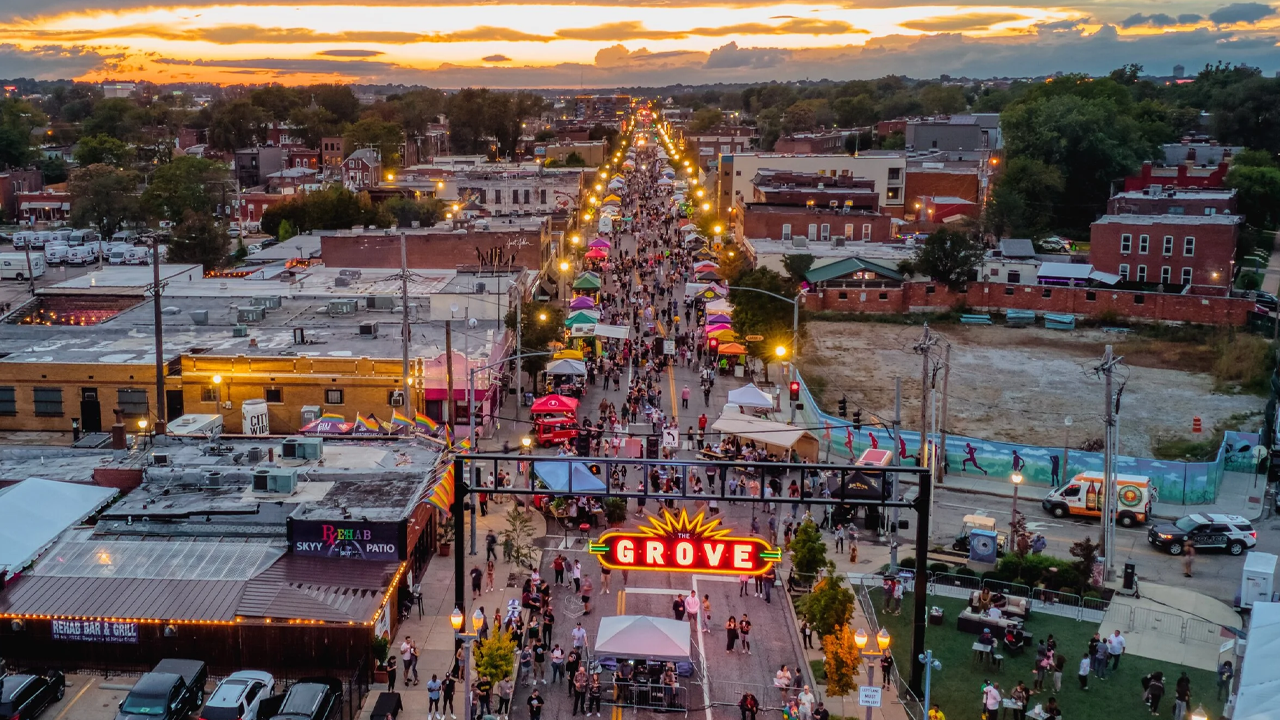
The Grove is centered along Manchester Avenue in the Forest Park Southeast neighborhood, and it is one of the most vibrant commercial corridors in the entire city. It's known for its eclectic mix of bars, restaurants, nightlife, and independent retailers — but it's also become a serious commercial real estate market that is attracting institutional-quality investors.
The neighborhood's appeal comes from a combination of factors that are hard to manufacture: genuine walkability, a diverse and engaged residential population, a distinctive urban character, and excellent proximity to major employment anchors, including Barnes-Jewish Hospital, Washington University Medical Center, and the Cortex Innovation District.
The Numbers That Got Investors' Attention
In 2025, one transaction put The Grove on the radar of commercial real estate investors nationwide. As reported by SLC3, Green Street finalized an $88 million sale of two of its most prominent Grove assets — the Chroma and Hue developments — to AHM Group, a private real estate investment firm. The two properties together included 346 residential units and 20,000 square feet of retail space.
Kyle Howerton, principal at AHM Group, described the properties as trophy-class assets in a trophy-class part of the city — specifically citing the neighborhood's proximity to major employers and to City Foundry as key factors in the acquisition decision.
That kind of language — "trophy" assets — is significant. It signals that The Grove has crossed a threshold from a scrappy emerging neighborhood to a legitimate institutional-quality market. That's good news for everyone who owns or is considering buying commercial property there.
Earlier Developments That Set the Stage
According to St. Louis Magazine, The Grove's current status was built on a foundation of smart mixed-use development over the past decade. Notable projects include Chroma (235 apartment homes with street-level retail), Terra at The Grove (307 residential units completed in 2022), and Hue — all of which brought hundreds of new residents and significant retail square footage to the neighborhood.
Each new resident is a potential customer for the businesses on Manchester Avenue, and each new business is a potential tenant for commercial space investors. That virtuous cycle is exactly what makes The Grove attractive.
What Types of Properties Are Performing Here?
- Ground-floor retail in mixed-use buildings: Food, beverage, boutique retail, and personal services businesses are thriving where foot traffic is strong.
- Restaurant and bar spaces: The Grove's identity as a nightlife and dining destination continues to attract new concepts, including nationally recognized brands.
- Boutique office space: Creative firms, wellness practitioners, and professional services businesses are drawn to the neighborhood's character and energy.
Investment-grade mixed-use assets: The $88M AHM Group deal shows there's now a market for institutional-quality deals in The Grove, not just small-scale investments.
Beginner tip: The Grove is a more mature market than Midtown or South Grand, which means lower risk — but also higher entry prices. If you're buying here, focus on locations along or near Manchester Avenue with high visibility and foot traffic. Due diligence on your tenants is critical; even great locations can see turnover.
3. Cortex Innovation District: The Crown Jewel of St. Louis Tech Real Estate
What Is Cortex — And Why Does It Matter So Much?
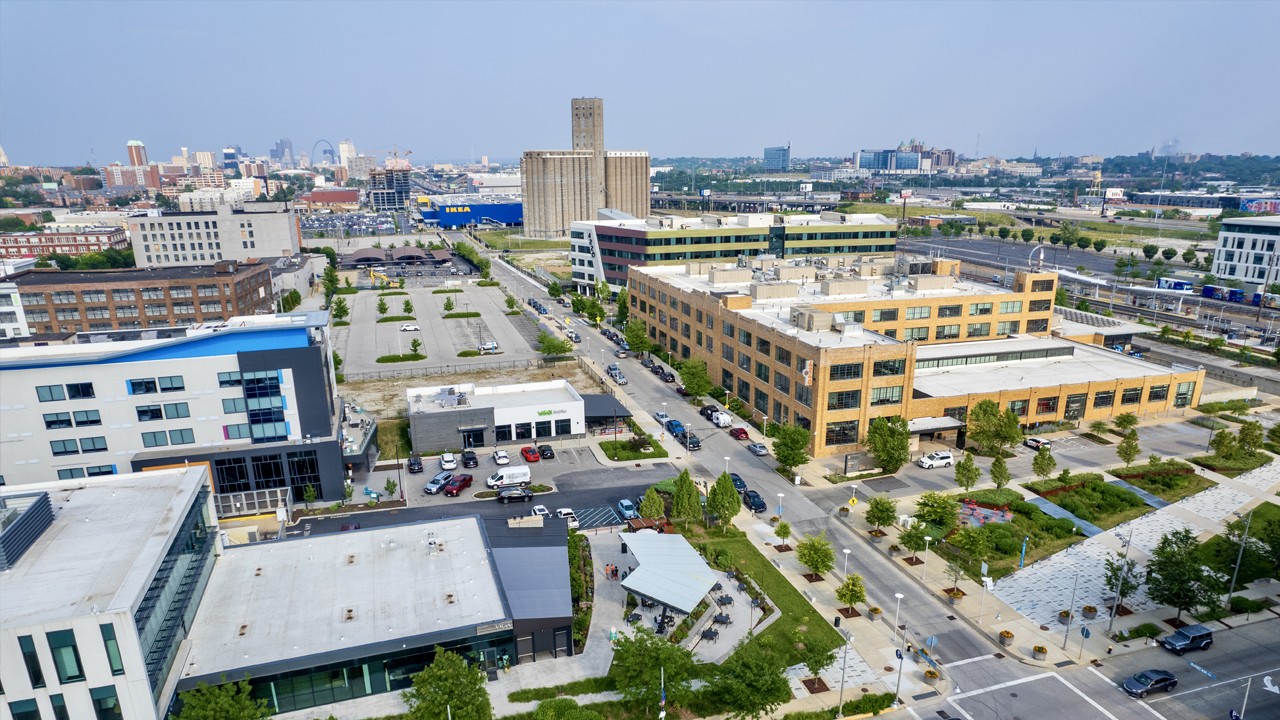
If you're going to understand one St. Louis commercial real estate submarket deeply, make it Cortex. The Cortex Innovation District is a 200-acre technology and innovation hub located in Midtown St. Louis, positioned between Washington University's medical campus and Saint Louis University. It is, without question, the most ambitious and successful urban revitalization project in St. Louis's recent history — and one of the most recognized innovation districts in the entire country.
To appreciate how remarkable Cortex is, you need to understand what it was before: a collection of blighted, abandoned industrial properties with little economic activity and declining property values. What it is today is something entirely different.
The Scale of Cortex's Transformation
The numbers are genuinely extraordinary. According to Cortex Innovation District's economic impact data:
- Over 369 companies are now headquartered or operating within the district
- Approximately 5,780 people are employed in Cortex
- The district generates $2.1 billion in annual regional economic output
- $1.33 billion has been invested in building out the district since development began
- Between 2014 and 2024, Cortex generated over $105.5 million in net new tax revenue for the City of St. Louis
Cortex's master plan envisions a total of $2.3 billion in construction and more than 4.5 million square feet of mixed-use development — ultimately supporting up to 15,000 permanent jobs. The district is not finished growing; it's still in the middle of its build-out.
Who's Here? The Tenant Roster
The companies operating in Cortex read like a list of the most influential organizations in technology, healthcare, and aerospace. According to HOK's Cortex case study, anchor tenants include Microsoft (its first Midwest regional headquarters), Boeing, Accenture, Centene, DuPont, and Esri — alongside hundreds of startups, research labs, and early-stage companies.
This mix is important for commercial real estate investors to understand. Large anchor tenants like Microsoft and Boeing provide stability and prestige — they sign long leases, pay on time, and attract other companies to the area. Meanwhile, the startup ecosystem creates constant, evolving demand for flexible office space, coworking, and lab space. Both types of tenants are valuable, and Cortex has both in abundance.
What Types of Properties Are Growing in Cortex?
- Class A office space: Technology companies and healthcare-focused businesses are paying premium rents for high-quality, amenity-rich office environments.
- Life science and biotech lab space: This is one of the hottest commercial real estate categories nationally, and Cortex is one of the few St. Louis submarkets with genuine lab inventory and demand.
- Coworking and flexible office: Startups and growing companies that don't want long-term leases fill flexible space quickly in Cortex.
- Ground-floor retail: With 5,780+ workers in the district daily, there's strong built-in demand for cafes, lunch spots, and convenience retail.
Hospitality: Cortex already has a hotel on site, and growing business travel to the district is creating demand for more lodging options nearby.
Beginner tip: Properties inside Cortex proper are largely controlled by major developers like Wexford Science + Technology, making direct investment there difficult for beginners. The smarter entry point is the surrounding blocks and adjacent neighborhoods — The Grove, Forest Park Southeast — which benefit from Cortex's spillover effects at more accessible price points.
A Model That Works
As St. Louis Magazine reported, Cortex has navigated the post-pandemic office market with remarkable resilience, continuing to attract tenants and grow even as national office vacancy rates climbed. That resilience is rooted in the district's unique combination of institutional backing, diverse tenant mix, and the irreplaceable anchor of world-class research universities and hospitals.
In short, Cortex works because it was designed to work. And it continues to create commercial real estate opportunities in the neighborhoods around it.
4. South Grand: The Underrated Neighborhood with Real Upside
What Is South Grand?
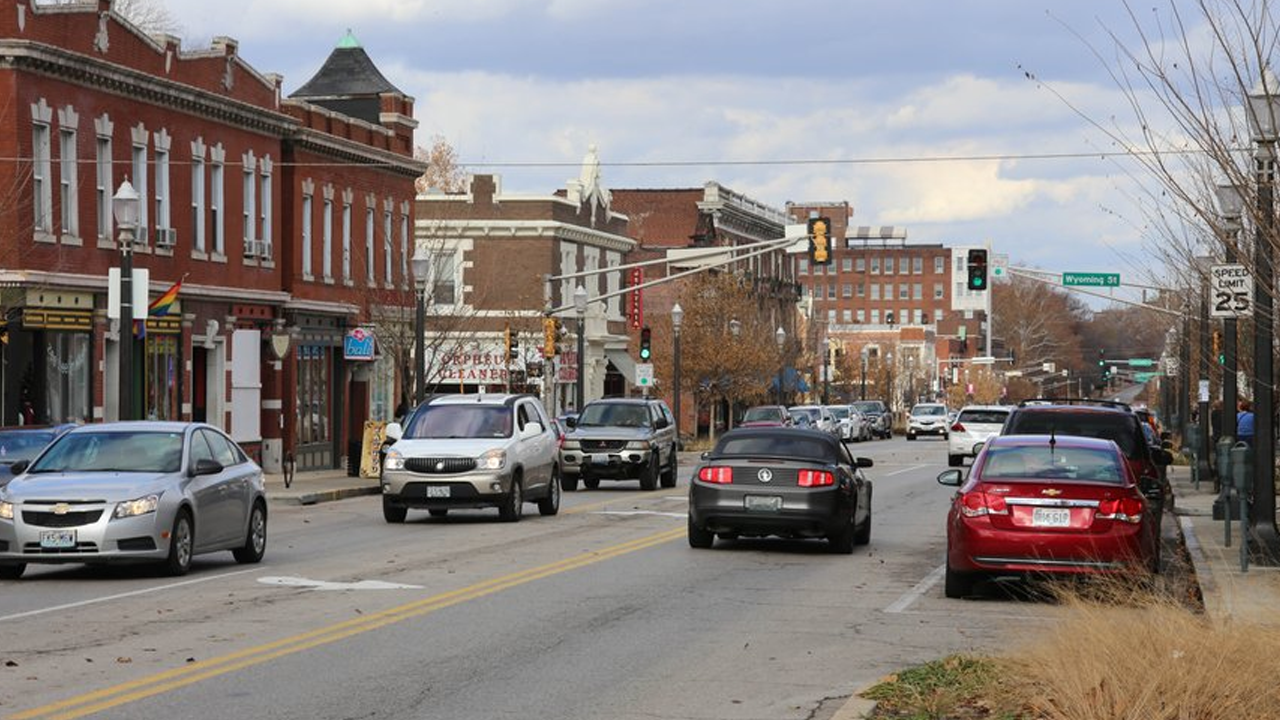
South Grand Boulevard runs through the Tower Grove South neighborhood, adjacent to one of the most beautiful urban parks in the Midwest: Tower Grove Park. It's a street with genuine character — lined with mature trees, older commercial buildings, and an eclectic mix of international restaurants, independent retailers, coffee shops, yoga studios, and neighborhood services.
South Grand is not making the same headlines as Cortex or attracting the same institutional capital as The Grove. It's a neighborhood commercial corridor — smaller scale, more accessible, and deeply rooted in the communities that surround it. And that's precisely what makes it interesting for a particular type of investor.
Why South Grand Is Worth Watching
Several factors are driving renewed commercial real estate interest along South Grand:
- Tower Grove Park: The park is one of the city's most beloved public spaces, drawing heavy foot traffic year-round from residents, visitors, and festival-goers. Events in and around the park directly benefit adjacent restaurants and retailers.
- Strong residential demand: The surrounding neighborhoods — Tower Grove South, Tower Grove East, and Shaw — have seen steady residential interest from young professionals and families who want walkable, urban living without paying Central West End prices.
- International dining destination: South Grand has long been recognized as one of the best dining corridors in St. Louis, with Vietnamese, Ethiopian, Thai, Mexican, and dozens of other international cuisines. This identity drives repeat visits and food tourism that keeps restaurant tenants busy.
- Relative affordability: Compared to properties in The Grove or Cortex-adjacent blocks, commercial real estate on South Grand often trades at significantly lower price points — making it one of the most accessible entry points in the city for beginner investors.
What Types of Properties Are Performing Here?
- Small retail storefronts: Boutiques, specialty food shops, bookstores, and local service businesses do well in this neighborhood's walkable environment.
- Restaurant and cafe spaces: South Grand's dining identity continues to attract new food concepts, including businesses that specifically want to be part of this neighborhood's culinary community.
- Health and wellness spaces: Yoga studios, fitness concepts, acupuncture clinics, and wellness practitioners have found a deeply receptive market along South Grand.
Small mixed-use buildings: Properties combining ground-floor commercial with one or two residential units above are common here and offer investors two income streams from a single asset.
Beginner tip: South Grand is an excellent market for first-time commercial investors because properties are smaller, prices are more accessible, and the neighborhood has genuine momentum. The risk to manage carefully is tenant turnover — independent businesses fail more often than corporate tenants. Build relationships with the local business community and connect with Tower Grove CDC for support.
A Community Resource Worth Knowing
One of South Grand's advantages for beginners is the presence of Tower Grove CDC — the neighborhood's community development corporation. Organizations like Tower Grove CDC actively work to connect investors with incentives, facilitate responsible development, and help match property owners with qualified tenants. For beginners who are new to the local market, connecting with the CDC is one of the smartest first steps you can take.
How to Evaluate Any St. Louis Submarket: A Beginner's Framework
Now that you have a picture of the four key submarkets, let's step back and talk about how to evaluate any commercial real estate opportunity — in St. Louis or anywhere. These five principles apply whether you're looking at a storefront on South Grand or an office building near Cortex.
Step 1: Identify the Demand Drivers
Ask yourself: what makes people come to this neighborhood? Is it employment, like the hospitals and universities anchoring Cortex and Midtown? Is it entertainment and dining — like The Grove and South Grand? Or is it residential growth creating demand for neighborhood services? The stronger, more diverse, and more durable the demand drivers, the more resilient the submarket will be through economic cycles.
The best submarkets have multiple overlapping demand drivers — employment, entertainment, and residential growth all reinforcing each other. All four neighborhoods in this guide benefit from some combination of these.
Step 2: Study Vacancy and Absorption Rates
Vacancy rate is the percentage of commercial space in a market that is currently empty. Lower vacancy generally means stronger demand. "Net absorption" measures how quickly empty space gets leased — positive absorption means more space is being filled than vacated, which is a healthy sign for landlords.
You can track these metrics for St. Louis through resources like Cushman & Wakefield's quarterly MarketBeat reports and CBRE St. Louis market research. Both publish free, regularly updated market data. Make it a habit to read these reports before making any investment decision.
Step 3: Research Comparable Sales and Leases
Before buying or leasing any commercial property, you need to know what similar properties have recently sold or leased for. This is called "comp" research, and it's foundational to understanding whether a property is priced fairly.
Platforms like LoopNet allow you to search available commercial properties and see listed prices. For sold comparables and more detailed data, working with a local commercial real estate broker is essential. St. Louis firms like Hilliker Corporation and Avison Young St. Louis specialize in the local market and can provide guidance that goes well beyond what's publicly available.
Step 4: Understand Tax Incentives
Missouri and the City of St. Louis offer several incentive programs that can dramatically improve the economics of a commercial investment. The most important ones to know:
- Tax Increment Financing (TIF): Used throughout all four of the neighborhoods in this guide, TIF redirects future tax revenue growth from a development area to fund public infrastructure and project costs.
- Chapter 353 Tax Abatements: These abatements reduce property taxes on redeveloped properties for a set period, typically 10 to 25 years.
- Historic Tax Credits: Missouri has one of the best Historic Tax Credit programs in the country, offering significant credits for rehabilitating certified historic buildings. Many properties in Midtown and South Grand qualify.
Before investing in any St. Louis commercial property, consult with a local commercial real estate attorney or CPA who understands these programs. The incentives are real and significant — but navigating them requires expertise.
Step 5: Think in Decades, Not Quarters
Commercial real estate is not a short-term play. The best opportunities in St. Louis right now are in neighborhoods that are early in their appreciation curves — places where today's investment will pay dividends over a five to fifteen-year horizon as development matures and demand grows.
Investors who came into Cortex ten years ago, or into The Grove fifteen years ago when it was still rough around the edges, are sitting on substantial gains today. The question is: where will you wish you had been a decade from now? That's the right framework for evaluating any St. Louis submarket.
Conclusion: St. Louis Is Growing — But Location Is Everything
St. Louis commercial real estate is not a monolith. The city contains multitudes, and the opportunities are concentrated in specific neighborhoods that are at different stages of their development arcs.
Cortex is the city's premier innovation real estate market — established, institutionally backed, and generating measurable, documented economic returns. The Grove has crossed from emerging to institutional-quality, with anchor transactions validating its status as a legitimate investment destination. Midtown is at a transformational inflection point, anchored by City Foundry and the growing Cortex ecosystem, with significant upside remaining. And South Grand offers accessible entry points for smaller and first-time investors who want to participate in a culturally vibrant, steadily growing corridor.
For beginners, the most important first step is the simplest one: go visit these neighborhoods. Walk the streets. Have lunch at a restaurant on South Grand. Walk through City Foundry. Stand on Manchester Avenue on a Friday evening and watch The Grove come alive. No amount of data analysis substitutes for understanding a neighborhood on the ground.
St. Louis is a city that rewards those who take the time to understand it. The neighborhoods in this guide are not just places on a map — they're living communities where smart commercial real estate decisions are being made right now, by investors who did their homework and acted on what they learned.
You've done the first part. Now it's time to take the next step.
Ready to Buy or Sell in St. Louis? House Sold Easy Has You Covered!
Navigating St. Louis’ red-hot luxury market doesn’t have to be a headache. With House Sold Easy, it’s all about less hassle—we’ve got you covered from start to finish. Our St. Louis experts know every corner of this city and will make buying your dream home or selling your high-end property a breeze. Don’t miss out on the hottest market in the U.S.! Contact House Sold Easy today and let’s make your real estate goals happen!